Businesses often know they need to improve their digital presence, but one question can make the decision surprisingly difficult:
Should we build a website, custom software, or a mobile app?
These three options can serve very different purposes. Choosing the wrong one can result in unnecessary development costs, complicated systems, or a digital product that customers simply do not use.
The right starting point is not the technology itself. It is the problem the business is trying to solve.
What Is a Business Website Best For?
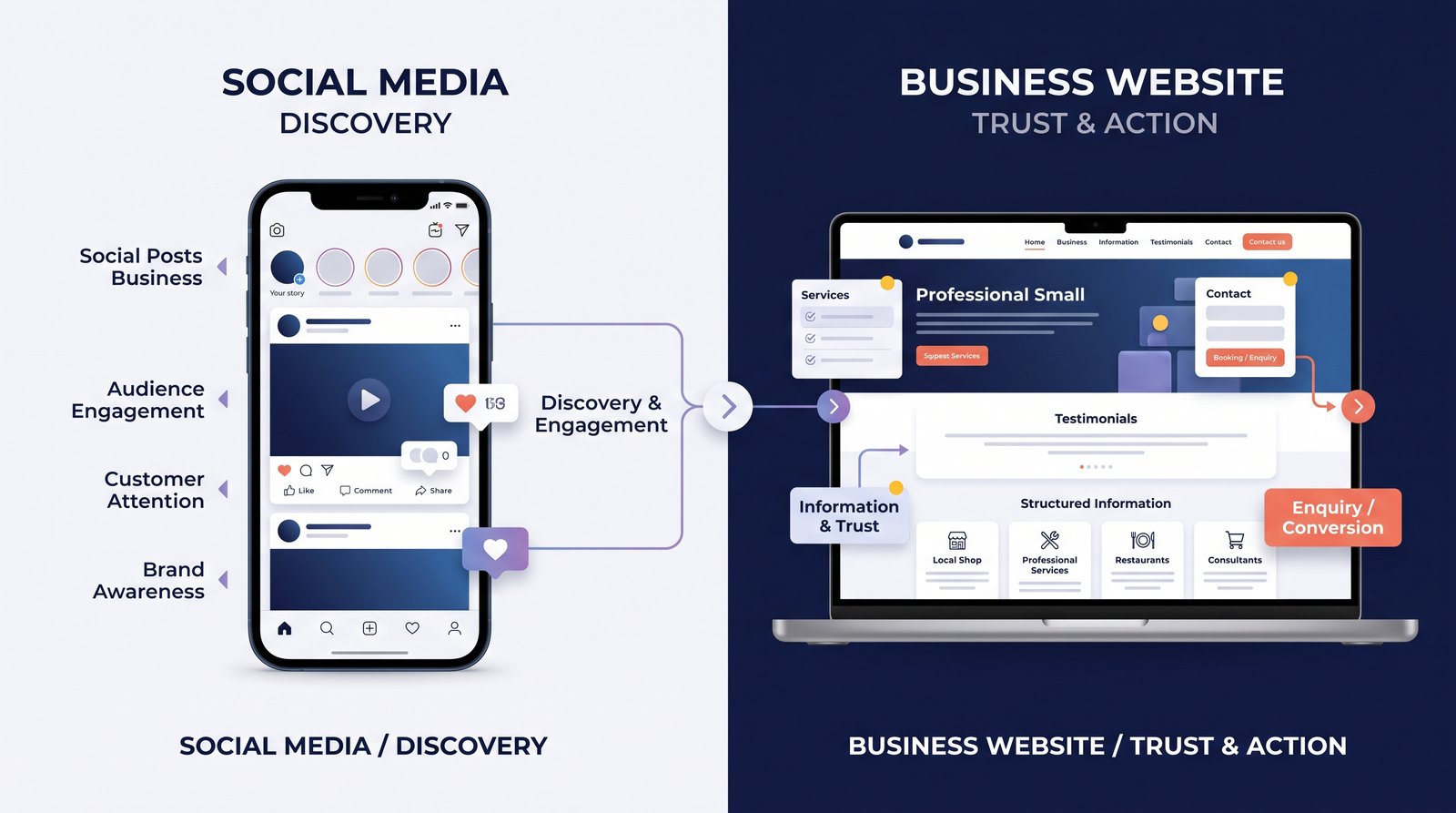
A website is often the best starting point for a business that needs a professional online presence.
- A well-built website can help customers:
- Learn about the company
- Explore services or products
- Find contact information
- Read useful content
- Request a quote
- Book an appointment
- Purchase products online
For many businesses, a website is the foundation of their digital presence.
A restaurant, consulting company, school, construction business, healthcare provider, or local service company may not need a mobile app or custom software at all.
A professionally structured website may be enough to achieve the main business objective.
When Does a Business Need Custom Software?
Custom software becomes more useful when the business has internal processes that are difficult to manage using spreadsheets, email, or unrelated software tools.
- For example, a company may need a system to manage:
- Employees
- Inventory
- Orders
- Customers
- Projects
- Reports
- Internal approvals
- Business workflows
In these situations, the system is often primarily built for the business itself, rather than for the general public.
A custom software platform can be designed around the company's actual workflow instead of forcing employees to adapt to a generic tool.
When Does a Mobile App Make Sense?
A mobile app can make sense when customers or employees need to use a digital service frequently from their phones.
- Examples might include:
- Food delivery
- Online learning
- Fitness platforms
- Booking services
- Customer loyalty programs
- On-demand services
- Field service applications
An app can provide a more focused mobile experience and may offer capabilities that are less convenient through a standard website.
But an app is not automatically better simply because it is an app.
The business needs to have a strong reason for customers to install and regularly use it.
- Website vs Software vs Mobile App
- A simple way to think about the three is:
- Website → Public online presence
- Software → Internal or specialized business operations
- Mobile App → Frequent mobile interaction
There can also be overlap.
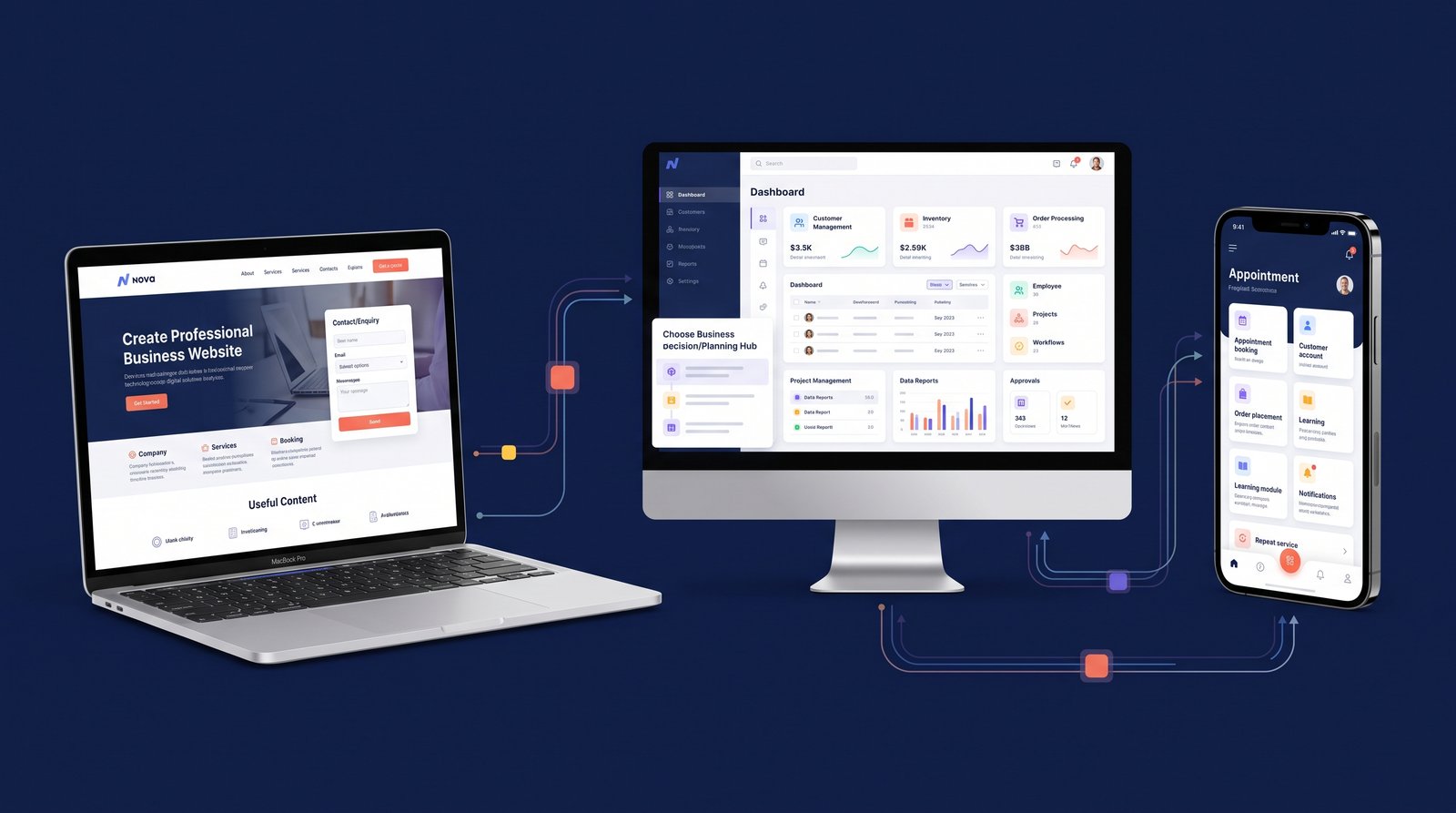
- For example, an e-commerce business might have:
- Website → Product discovery and SEO
- Mobile App → Repeat customer purchases
- Software → Order and inventory management
These systems can work together rather than existing independently.
- Questions to Ask Before Choosing
- Before starting development, ask:
Who will use it?
- Will the primary users be:
Potential customers?
Existing customers?
Employees?
Administrators?
Business partners?
The answer can immediately narrow down the options.
How frequently will people use it?
A website may be enough for a customer who visits occasionally.
A mobile app becomes more attractive when people need to return regularly.
What problem are you solving?
- A company may say:
- “We need an app.”
- But the underlying problem might actually be:
- “Customers need an easier way to book appointments.”
In that case, a well-designed website and booking system might solve the problem without requiring an app.
Does the business have an internal workflow problem?
If employees are spending hours manually managing records, approvals, reports, or repetitive tasks, custom software may provide more value than a customer-facing app.
- When a Website Is the Better Choice
- A website may be the right choice when your priority is:
- Building credibility
- Being discoverable through search
- Explaining products or services
- Generating enquiries
- Publishing content
- Selling online
- Reaching customers without requiring an app download
It is often the most practical first digital investment for a new or growing business.
- When Custom Software Is the Better Choice
- Custom software may be appropriate when:
- Your current processes are inefficient
- Multiple departments need the same information
- You rely heavily on spreadsheets
- Existing software does not fit your workflow
- You need specific business rules
- You want centralized reporting
- You need different permission levels for employees
The purpose should be to solve an operational problem, not simply to have “custom software.”
- When a Mobile App Is the Better Choice
- An app is worth considering when:
- Customers use your service frequently
- Mobile access is central to the experience
- Push notifications are valuable
- The service involves regular interactions
- Mobile-specific features are important
- You already have a customer base willing to use the app
A business with thousands of repeat users may have a very different case for an app than a company whose customers only visit the website once or twice a year.
Can You Start With a Website and Build an App Later?
Absolutely.
In fact, this can be a sensible approach for many businesses.
- A company can start with:
- Website → Learn how customers behave
Then, once there is evidence that customers need a more dedicated mobile experience:
- Website → Mobile App
This can reduce the risk of spending heavily on an app before knowing whether people actually need it.
The same principle applies to custom software.
A business can first identify its operational bottlenecks and then build software around those proven needs.
What About Development Cost?
The cost varies significantly.
A basic business website is generally a much smaller project than a custom software system with multiple user roles, integrations, databases, and reporting.
- A mobile app can also vary widely depending on:
- Number of platforms
- Features
- Backend requirements
- Authentication
- Payment integration
- Notifications
- APIs
- Maintenance needs
This is another reason to define the problem before choosing the technology.
- Don't Build Technology Just Because Competitors Have It
A competitor launching an app does not automatically mean your business needs one.
Similarly, a large company using custom software does not mean a small business should immediately build its own system.
Technology should support business strategy.
- Ask:
Will this make something easier?
Will customers actually use it?
Will employees save time?
Will it improve revenue or customer experience?
If the answer is unclear, more planning may be needed before development starts.
- A Practical Decision Framework
- You can use this simple approach:
- Choose a Website if:
You mainly need visibility, information, lead generation, bookings, content, or online sales.
- Choose Custom Software if:
You need to improve internal processes, manage data, automate workflows, or create a specialized business system.
- Choose a Mobile App if:
Customers need frequent mobile interaction and a dedicated app experience provides meaningful value.
- Choose a Combination if:
Your business needs a public-facing website, internal systems, and a mobile experience that work together.
- Common Mistakes
- Starting With Technology Instead of the Problem
Choosing “app” or “software” before defining the actual need often creates unnecessary complexity.
- Building Too Many Features
More features do not automatically create more value.
Start with the features that solve the core problem.
- Ignoring Maintenance
Websites, software systems, and mobile apps all need updates, monitoring, fixes, and improvements.
- Forgetting the User
A technically advanced product can still fail if customers or employees find it difficult to use.
Frequently Asked Questions
For many small businesses, yes. A well-designed website can provide a strong online presence, generate enquiries, support sales, and answer customer questions.
Not always. If the website provides everything customers need and app-specific features are not important, an app may not add enough value to justify the additional investment.
Custom software is often used to manage specific business processes such as inventory, customer management, operations, reporting, bookings, or internal workflows.
Yes. They can share data and communicate through APIs or other integrations when the architecture is designed appropriately.
Not necessarily. Starting with a website or simpler digital product can help validate the business idea before investing in a full mobile application.
Final Thoughts
The right digital product is the one that solves the right problem.
A website is often the strongest foundation for reaching customers online. Custom software can make internal business operations more efficient. A mobile app can provide a dedicated experience when customers need frequent interaction from their phones.
There is no universal winner.
Before investing in development, define who will use the product, what problem it solves, how frequently it will be used, and what outcome the business expects.
Once those answers are clear, choosing the technology becomes much easier.