Your website may still be working, but that does not always mean it is doing its job well.
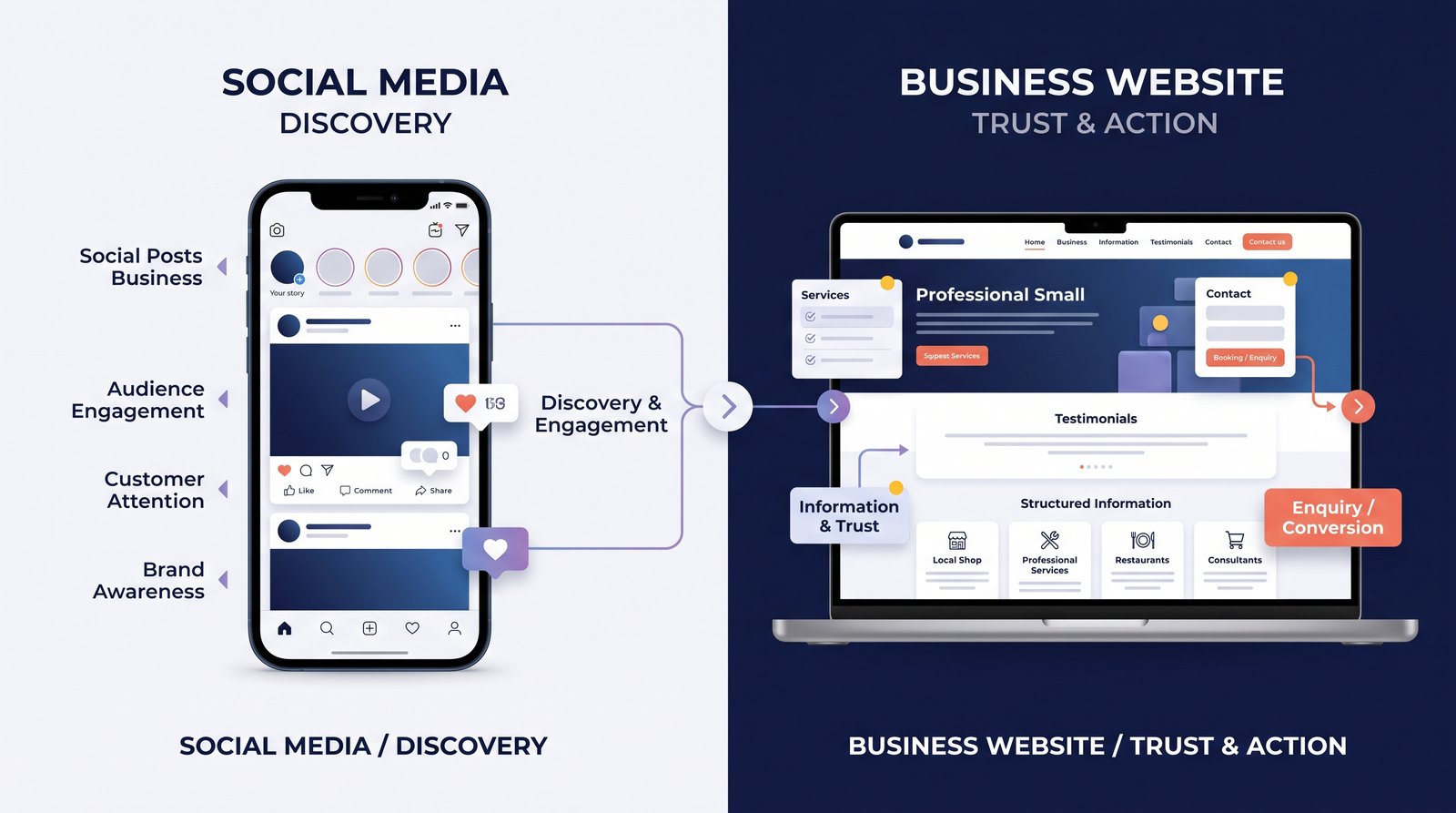
A business website is often the first place a potential customer goes after discovering a company through search, social media, an advertisement, or a recommendation. If the site looks outdated, loads slowly, is difficult to use on a phone, or makes visitors work too hard to find information, people may simply leave.
A redesign is not necessarily about making a website look newer. A good redesign should improve how the website works for both the business and its customers.
Here are seven signs that it may be time to reconsider your current website.
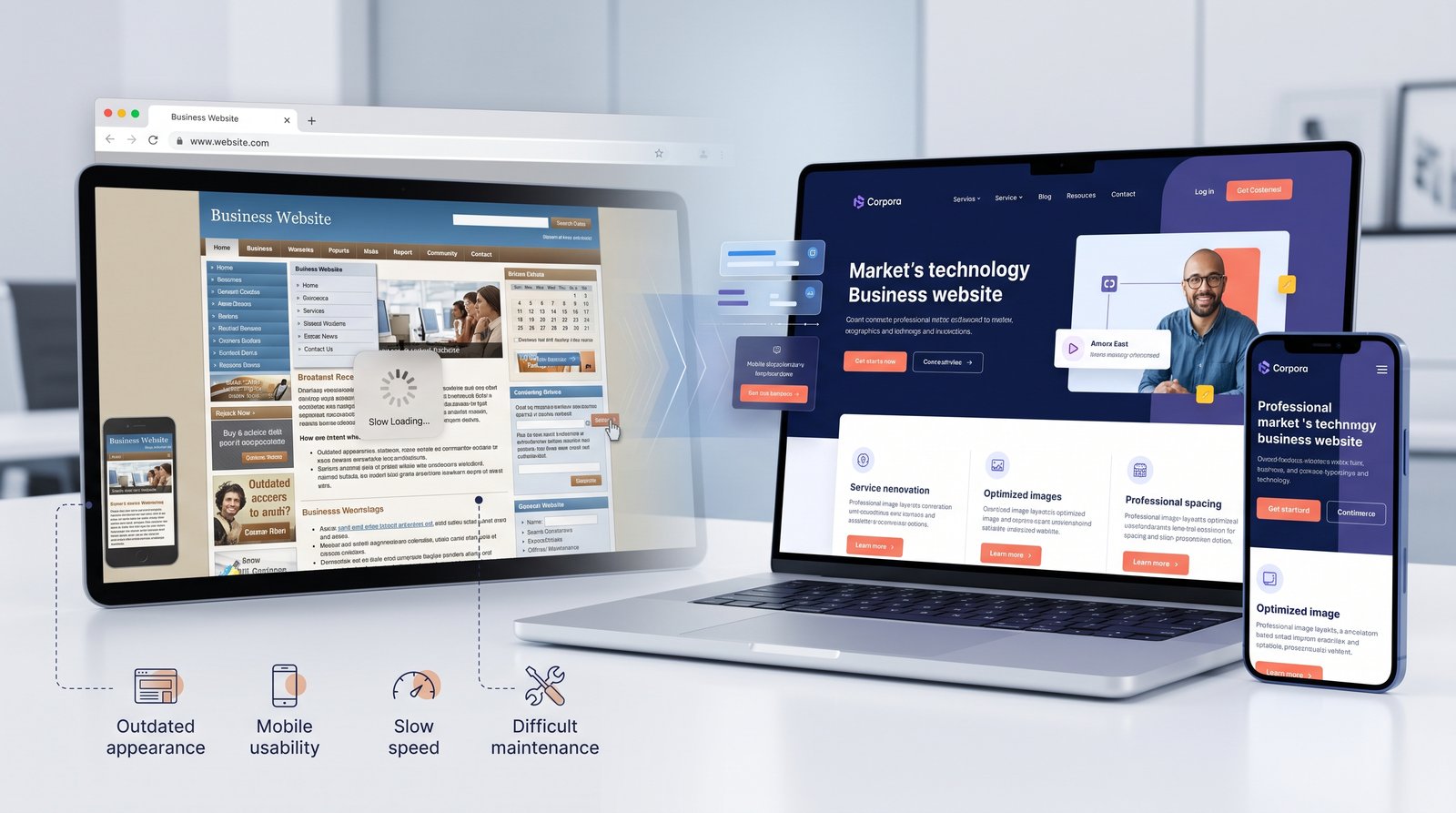
- Your Website Looks Outdated
Web design trends change, but the bigger issue is how customers perceive your business.
An outdated layout, inconsistent typography, old-looking graphics, or crowded pages can make a company appear less professional than it actually is.
This can be especially noticeable when competitors have cleaner, faster, and more modern websites.
A redesign gives you an opportunity to bring the visual identity of the website in line with the business you have today—not the business you were several years ago.
- Your Website Is Difficult to Use on Mobile
A website that looks good on a desktop but feels frustrating on a phone has a serious usability problem.
- Visitors should be able to:
- Read content comfortably
- Navigate between pages
- Tap buttons easily
- View images properly
- Fill out forms without excessive scrolling
- Find contact information quickly
Mobile usability should not be treated as an optional feature. It should be part of the core website experience.
- Your Website Loads Slowly
People do not want to wait for a website to load, especially when competing options are only a search away.
Large images, unnecessary scripts, outdated code, excessive plugins, and poorly optimized assets can all contribute to slow performance.
A redesign can be a good opportunity to simplify the website and improve technical performance.
- That may include:
- Compressing images
- Removing unnecessary scripts
- Improving code structure
- Optimizing fonts and assets
- Reducing unnecessary third-party tools
A faster site can create a better experience before a visitor has even read the first paragraph.
- Visitors Cannot Quickly Understand What You Offer
One of the most common website problems is unclear messaging.
- Someone visiting your homepage should quickly understand:
Who are you?
What do you offer?
Who do you help?
What should the visitor do next?
If visitors need to read several pages before understanding what the business actually does, the website is creating unnecessary friction.
A redesign can improve the information hierarchy so the most important information is easier to find.
- Your Website Gets Visitors but Few Enquiries
Traffic alone is not a success metric.
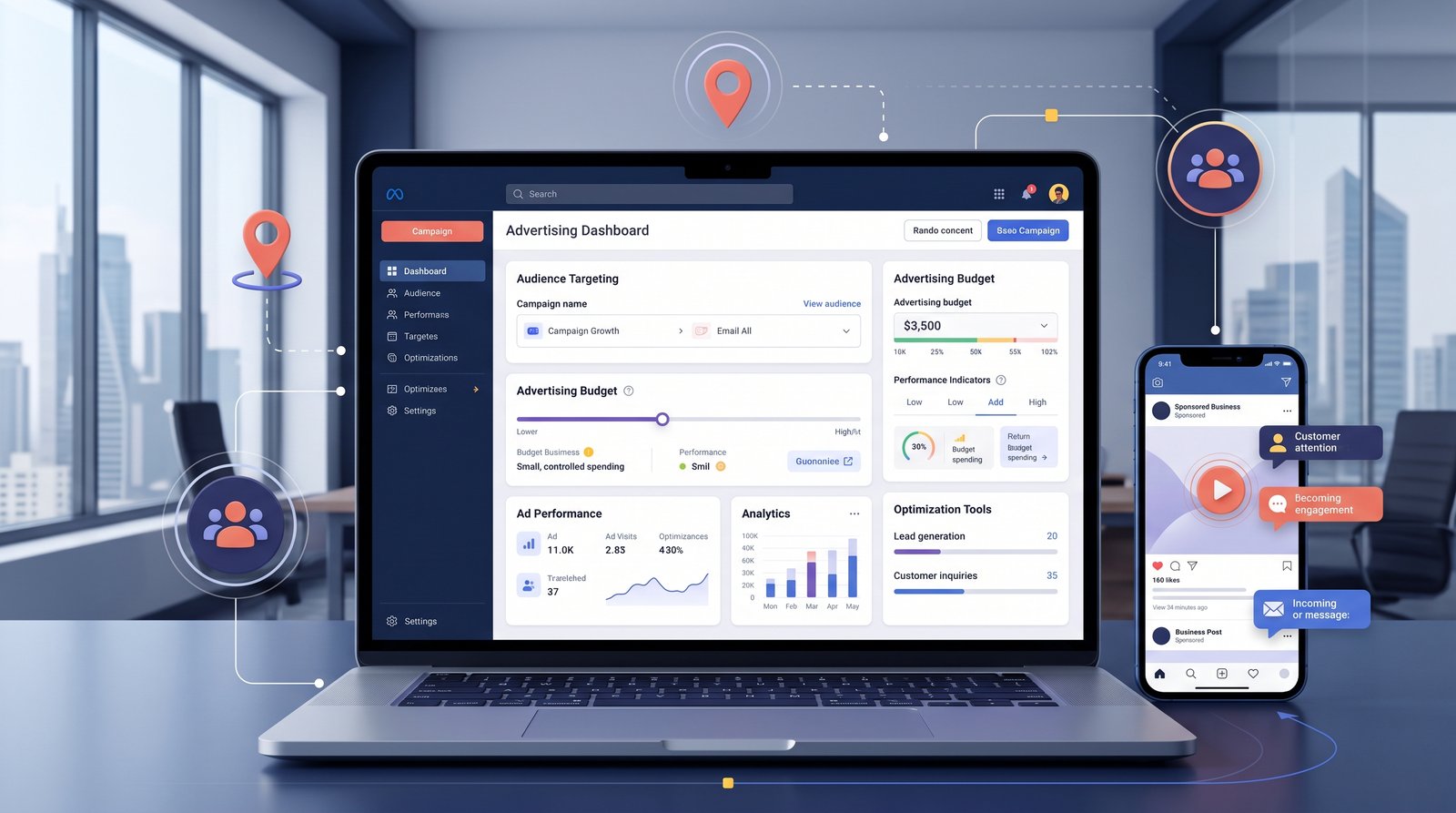
A website may attract visitors through search engines, social media, or advertising but still generate very few calls, messages, bookings, or enquiries.
- This can happen when:
- Calls to action are unclear
- Contact information is difficult to find
- Forms are too complicated
- Service pages are weak
- Visitors do not trust the business yet
- The next step is not obvious
A redesign should consider the journey from landing on the website to taking action.
- Your Content No Longer Reflects Your Business
Businesses change.
Services are added. Products are removed. Locations change. New industries are served. The company's positioning may also become more focused over time.
An old website often continues displaying outdated information simply because nobody has updated it.
A redesign gives you the chance to review the content as well as the design.
- Ask:
Are all our services still accurate?
Are the contact details correct?
Does the website reflect our current target customers?
Are our best projects or products visible?
Does our homepage communicate what we do today?
A website should represent the current business, not its history.
- Your Website Is Hard to Maintain
Sometimes the problem is behind the scenes.
If making a small change requires editing complicated files, fixing broken components, or worrying that one update will affect another part of the website, the existing structure may be holding the business back.
A modern website should ideally be easier to manage and extend.
- That is particularly important if you regularly add:
- Blog articles
- New services
- Case studies
- Products
- Team information
- Landing pages
A better structure can reduce the time and effort required for future updates.
Does a Website Redesign Mean Starting From Zero?
Not necessarily.
Some websites need a complete rebuild. Others only need improvements to specific areas.
For example, a business may keep its existing branding and content but improve:
- Homepage structure
- Mobile experience
- Page speed
- Navigation
- Service pages
- Contact forms
- Calls to action
The right approach depends on what is actually causing the current problems.
- Website Redesign vs Website Refresh
These terms are sometimes used interchangeably, but they can mean different things.
- A website refresh usually involves smaller changes such as:
- Updating colors
- Replacing images
- Improving typography
- Updating content
- Adjusting layouts
A website redesign usually involves broader changes to structure, user experience, navigation, functionality, and sometimes the underlying technology.
Knowing the difference can help a business avoid spending more than necessary.
How to Decide Whether You Really Need a Redesign
Before making a decision, review your current website from a customer's perspective.
- Try completing simple tasks:
Can I understand the business within a few seconds?
Can I find the main service easily?
Can I contact the company without searching through the page?
Does the website work comfortably on my phone?
Would I trust this business based on its website?
If several answers are no, there may be a stronger case for a redesign.
Frequently Asked Questions
There is no fixed schedule. A redesign should be driven by business needs, user experience, technology, and performance rather than a particular number of years.
No. Sometimes a focused visual and usability refresh is enough. The right solution depends on the problems the website currently has.
It can help when the redesign improves navigation, messaging, trust elements, calls to action, mobile usability, and the overall customer journey. However, results depend on the wider marketing strategy and the quality of the traffic coming to the site.
Yes. Important SEO elements such as page structure, URLs, internal links, content, redirects, metadata, and technical performance should be considered during the redesign process rather than after launch.
The timeline depends on the size of the website, number of pages, functionality, content requirements, integrations, and approval process.
Final Thoughts
A website redesign should be more than a visual makeover.
The real opportunity is to create a website that is easier to use, easier to maintain, clearer for customers, and better aligned with the business.
When the current website no longer represents the company, works well on mobile, loads efficiently, or helps visitors take the next step, a redesign may be worth considering.
The best redesign is not necessarily the one with the most visual effects. It is the one that makes the entire digital experience simpler and more useful.