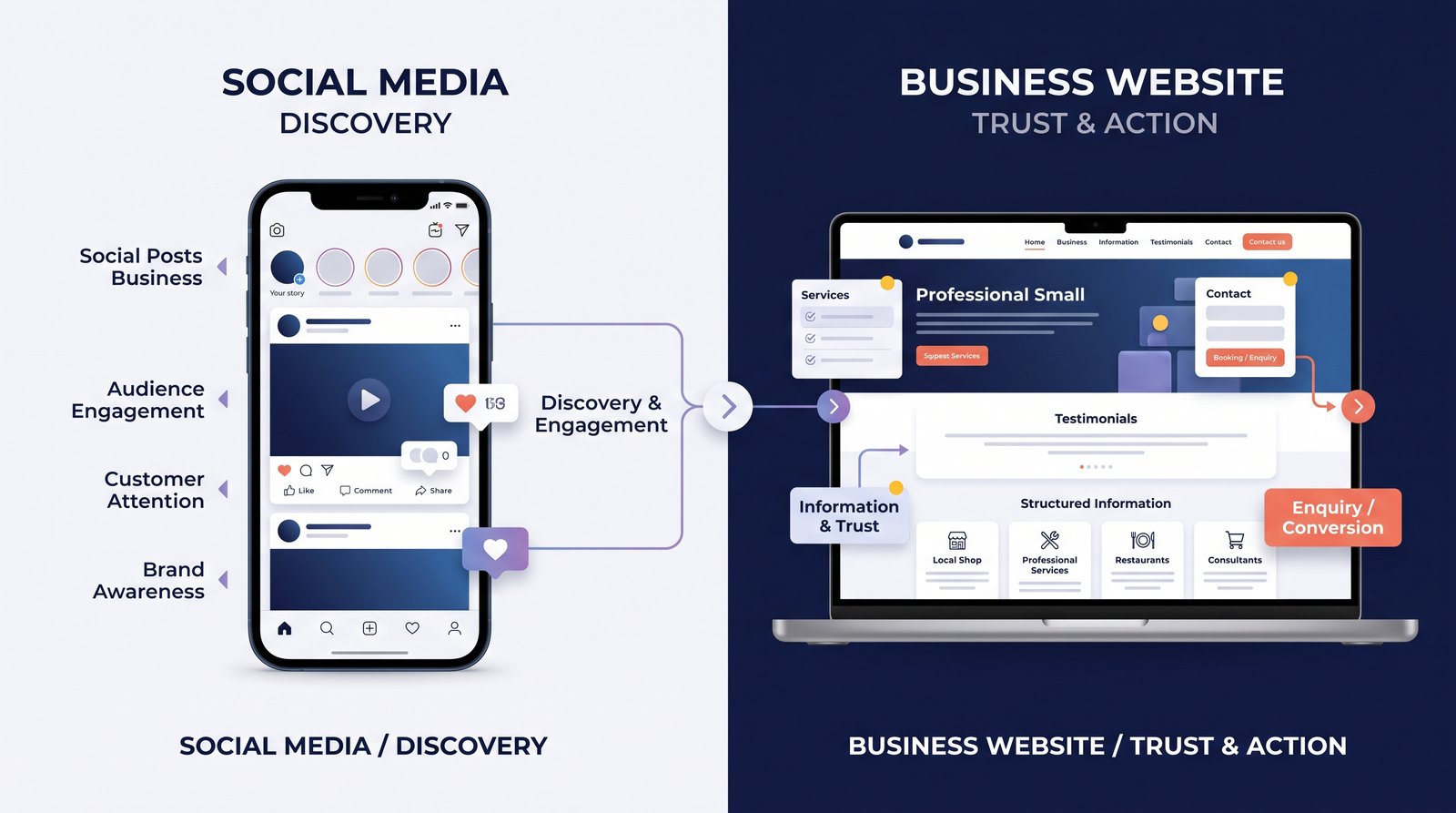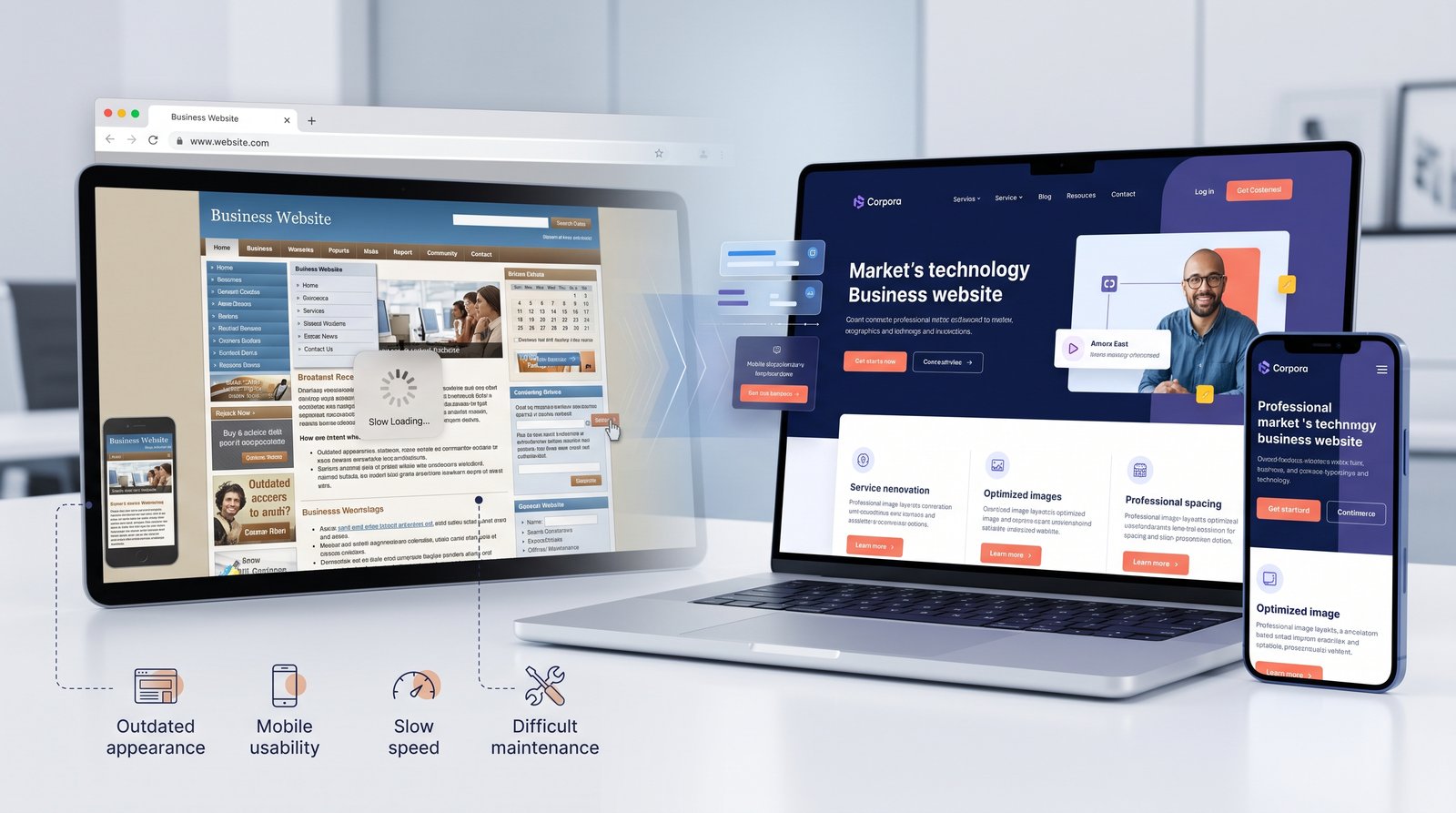
Not every business needs the same kind of website.
A local service company may only need a fast, professional website with a few pages and clear contact options. An online store needs product management, checkout, payments, and order handling. A growing company may need integrations, custom features, or a system that can expand as the business grows.
This is why choosing the right website development approach matters.
The question should not simply be, “Which technology is best?” A better question is:
What does your business need the website to accomplish today, and what might it need tomorrow?
- Start With the Business Goal
Before choosing a platform or development method, define the website's main purpose.
- Your goal might be to:
- Build a professional online presence
- Generate enquiries
- Sell products
- Accept bookings
- Publish content
- Showcase projects
- Automate customer communication
- Support an internal business process
The goal influences everything that comes later, from page structure to technology choice.
- Three Common Approaches
- Most business websites can broadly fall into one of three approaches:
- Template-Based Website
This approach uses an existing theme or template and customizes it for the business.
- It can be useful when:
- The budget is limited
- The business needs a website quickly
- The required functionality is simple
- A highly customized design is not necessary
The advantage is speed and familiarity.
The limitation is that the business may need to work within the template's structure.
- CMS-Based Website
A content management system allows businesses to manage website content through an administrative interface.
- This can be useful when:
- Blog publishing is important
- Multiple people need to manage content
- Pages change regularly
- The company wants to update content without editing code
The exact CMS can vary depending on the website's requirements.
- Custom Website Development
A custom approach gives developers much more control over design, functionality, and technical architecture.
- It can be appropriate when a business needs:
- Unique page structures
- Custom workflows
- Advanced integrations
- Specialized functionality
- Web applications
- Complex business requirements
The trade-off is that custom development generally requires more planning, development, testing, and ongoing technical support.
How Do You Choose?
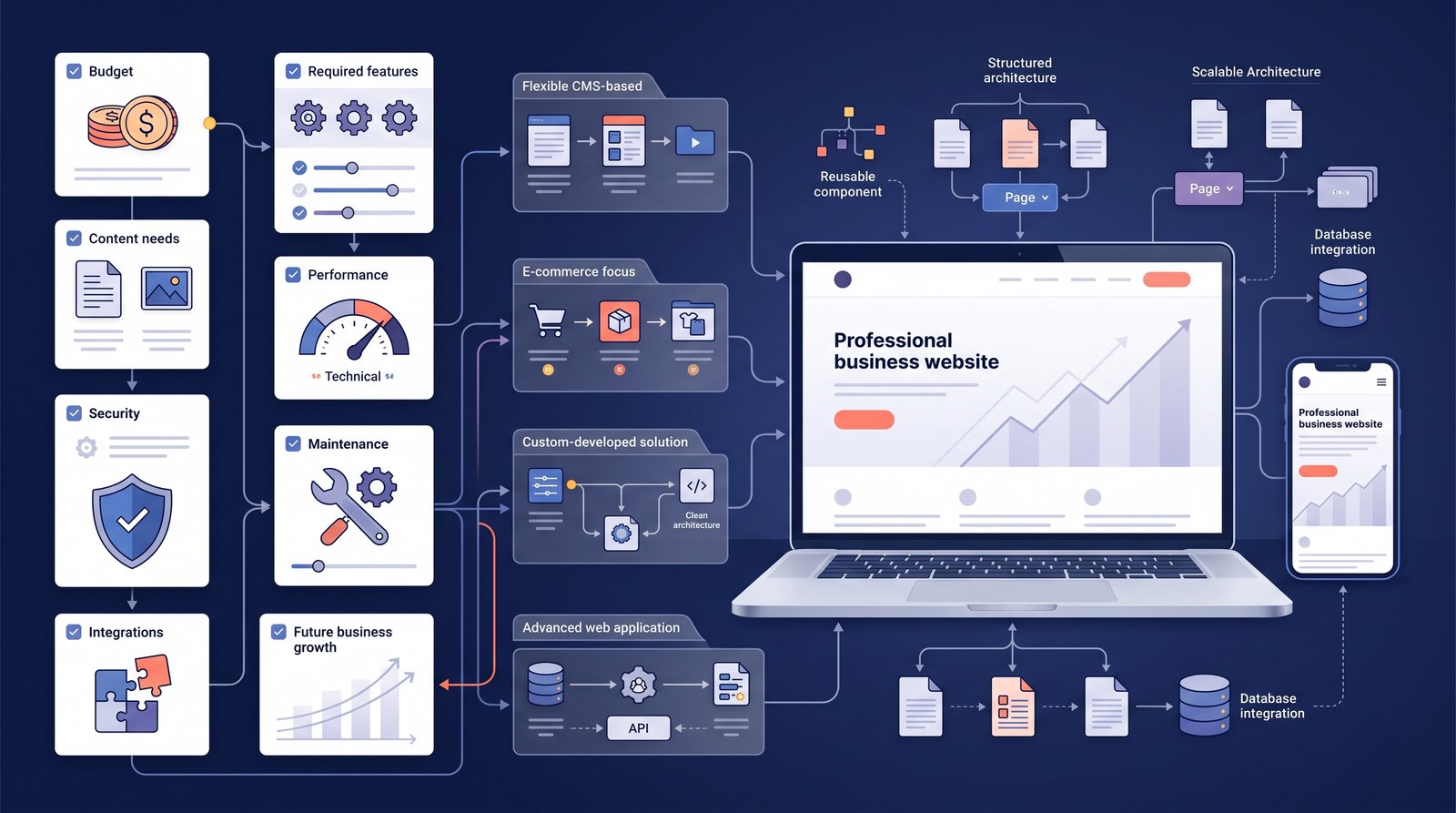
The right approach depends on several factors.
- Budget
Budget does matter, but it should not be the only deciding factor.
A business should consider both the initial development cost and the long-term cost of maintaining the website.
A lower-cost solution that needs frequent rebuilding may not provide better value than a more suitable system built correctly from the start.
- Functionality
Think about what users actually need to do.
Do they only need to read information?
- Do they need to:
Submit forms?
Book appointments?
Buy products?
Create accounts?
Track orders?
Make payments?
Interact with a chatbot?
Access personalized information?
The more complex the functionality, the more important the technical architecture becomes.
- Content Management
Ask how often the website will change.
A company website with occasional updates may not require the same content-management setup as a publication adding multiple articles every week.
If your marketing team needs to publish and edit content regularly, an appropriate content management system may be valuable.
- Expected Growth
A website should not only fit today's requirements.
Consider what the business may need in the next few years.
- For example, you may start with:
- Company website
- and later add:
- Blog → Booking → E-commerce → Customer portal → Automation
That does not mean you need to build every future feature immediately.
It means the initial architecture should avoid making future growth unnecessarily difficult.
- Performance
Technology choices can affect performance, but the platform alone does not determine whether a website is fast.
- Other factors include:
- Image sizes
- Code quality
- Third-party scripts
- Hosting
- Caching
- Fonts
- Page structure
A well-built website can perform well when these factors are handled properly.
- Security and Maintenance
Every website needs some level of maintenance.
- A business should understand:
Who will update the software?
Who will manage backups?
Who will handle security issues?
Who will fix problems?
How will new features be added?
A website is not finished simply because it has been launched.
The ongoing maintenance requirement depends heavily on how the website is built.
Static Websites: When Do They Make Sense?
Static websites can be an excellent option for businesses that mainly need informational pages.
- They can provide:
- Fast loading
- Simple hosting
- Low maintenance requirements
- A smaller technical attack surface
- Straightforward deployment
They may be a good fit for company websites, portfolios, landing pages, and other content that does not require a database-driven application.
However, a static approach may become less convenient when a business needs complex content management, user accounts, or database-driven functionality.
- When a CMS May Be Better
A content management system can make sense when content is regularly updated by non-technical users.
- For example, a business might need to publish:
- Blog articles
- News
- Job openings
- Products
- Events
- Case studies
A CMS can make these activities easier without requiring someone to edit website code for every change.
- When Custom Development Is Worth Considering
Custom development becomes more attractive when the business has requirements that standard website platforms do not handle efficiently.
- For example:
A delivery company may need rider management and operational workflows.
A training company may need course management and student access.
A professional service firm may need complex booking or client portals.
A growing organization may need multiple systems connected through APIs.
In these cases, building around the actual workflow can provide more flexibility.
- Don't Choose Technology Based Only on Popularity
A popular technology is not automatically the right choice for every project.
- Similarly:
Custom does not always mean better.
WordPress does not always mean cheaper.
Static does not always mean limited.
An app does not always mean more advanced.
The correct solution is the one that meets the business requirements efficiently.
- Questions to Ask Your Developer
- Before starting a project, ask:
What technology are you recommending, and why?
What functionality is included?
Can the website scale later?
Who owns the website and code?
How will backups work?
What happens after launch?
How easy will future updates be?
These questions can reveal more than simply asking for a development price.
- A Practical Decision Guide
- Choose a simple website when:
You need pages, information, contact options, and a professional digital presence.
- Choose a CMS when:
You need to publish and manage content regularly.
- Choose custom development when:
You need specialized workflows, complex functionality, or integrations that standard tools cannot handle effectively.
- Combine approaches when:
Different parts of the business have different requirements.
For example, a company could use a public-facing website alongside custom software and a mobile application.
- Common Mistakes
- Choosing Based Only on Price
The cheapest option may not be the best long-term choice.
- Building Too Much Too Early
Unnecessary features increase complexity and cost.
- Ignoring Future Maintenance
Every technical system needs a plan for updates, fixes, and support.
- Not Thinking About Content
A beautiful website can still underperform if the business does not have a clear plan for the information customers need.
Frequently Asked Questions
Yes. Static websites can be a strong choice for businesses that mainly need fast, secure, informational pages without complex database functionality.
No. It can be useful for many projects, particularly when regular content management is important, but the right solution depends on the business requirements.
Custom development is worth considering when the business needs specialized workflows, unique functionality, complex integrations, or a system that does not fit well within standard platforms.
Yes. Many businesses start with a focused website and add functionality as their needs become clearer.
Both matter, but neither should be chosen in isolation. A successful website needs an appropriate technical foundation, a clear user experience, useful content, good performance, and a design that supports the business goal.
Final Thoughts
Choosing a website development approach is really a business decision, not just a technology decision.
Start by identifying what customers need, what your team needs to manage, and what the website should accomplish.
A simple website may be exactly right for one company. Another may need a CMS, custom software, or a combination of systems.
The best approach is usually the one that solves today's problems without creating unnecessary complexity for tomorrow.