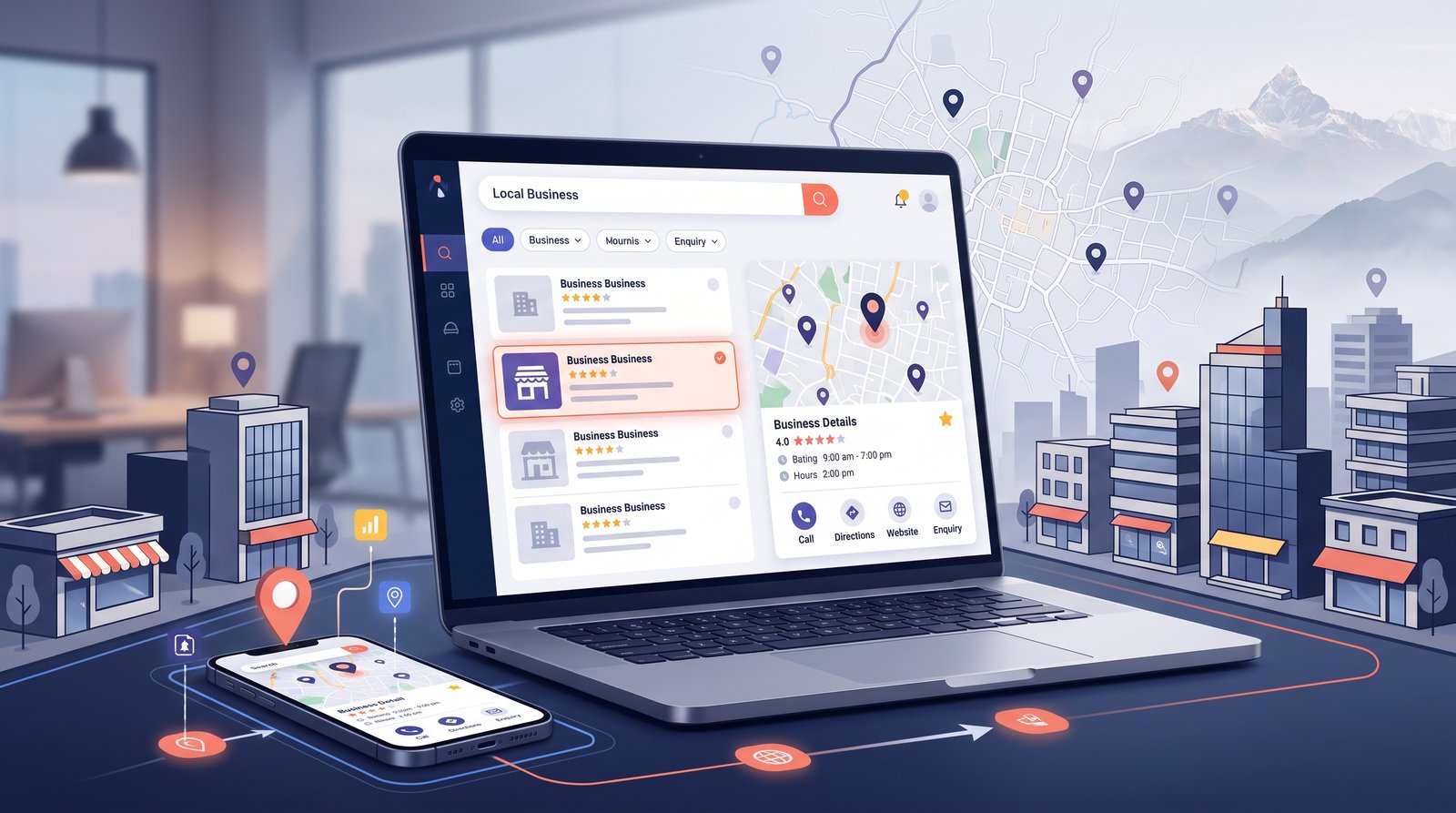
When someone searches for a business near them, they usually want an answer they can act on quickly. They may be looking for a restaurant in Kathmandu, a dental clinic nearby, a digital agency, a training institute, or a company that provides a particular service.
For businesses operating in Kathmandu, appearing prominently in local search can therefore bring highly relevant visitors to the website and business profile.
This is where local SEO becomes useful.
Local SEO is the process of improving a business's online presence so that it has a better chance of appearing when people search for relevant products or services in a particular location.
What Is Local SEO?
Traditional SEO focuses on helping web pages appear for relevant searches across broader geographic areas.
Local SEO adds a location-based element.
- For example:
- "digital marketing agency"
- is different from:
- "digital marketing agency in Kathmandu"
The second search gives a much stronger indication of local intent.
Local SEO helps businesses make their location, services, contact information, and business details clearer to search engines and potential customers.
Why Local SEO Matters for Kathmandu Businesses
Kathmandu has businesses across almost every industry, from restaurants and retail stores to professional services, education providers, healthcare businesses, technology companies, and tourism-related services.
Many customers begin their search online before contacting a local business.
- A person may search for:
- A service near their area
- A company in Kathmandu
- A nearby restaurant
- A local training center
- A specialist or professional
- A supplier or service provider
Showing up at the right moment can put a business in front of people who are already looking for what it offers.
- Start With Your Google Business Profile
For many local businesses, the Google Business Profile is one of the most important parts of a local SEO strategy.
The profile should accurately represent the business.
- Make sure important information is complete and consistent, including:
- Business name
- Address
- Phone number
- Website
- Business category
- Working hours
- Services
- Photos
A business should also keep its profile updated when important details change.
- Choose the Right Business Category
The primary business category helps communicate what the company actually does.
Choosing a category that is too broad may make it harder to communicate the business's main purpose.
For example, a company primarily providing web development should not choose an unrelated general category simply because it sounds similar.
Use the most accurate primary category available and add relevant secondary categories where appropriate.
- Keep Business Information Consistent
Your business name, address, and phone number should be consistent wherever the company appears online.
- This can include:
- Website
- Google Business Profile
- Social media profiles
- Business directories
- Industry listings
Inconsistent information can create confusion for both users and search engines.
For example, using one phone number on your website and a different number on a business directory makes the business information less consistent.
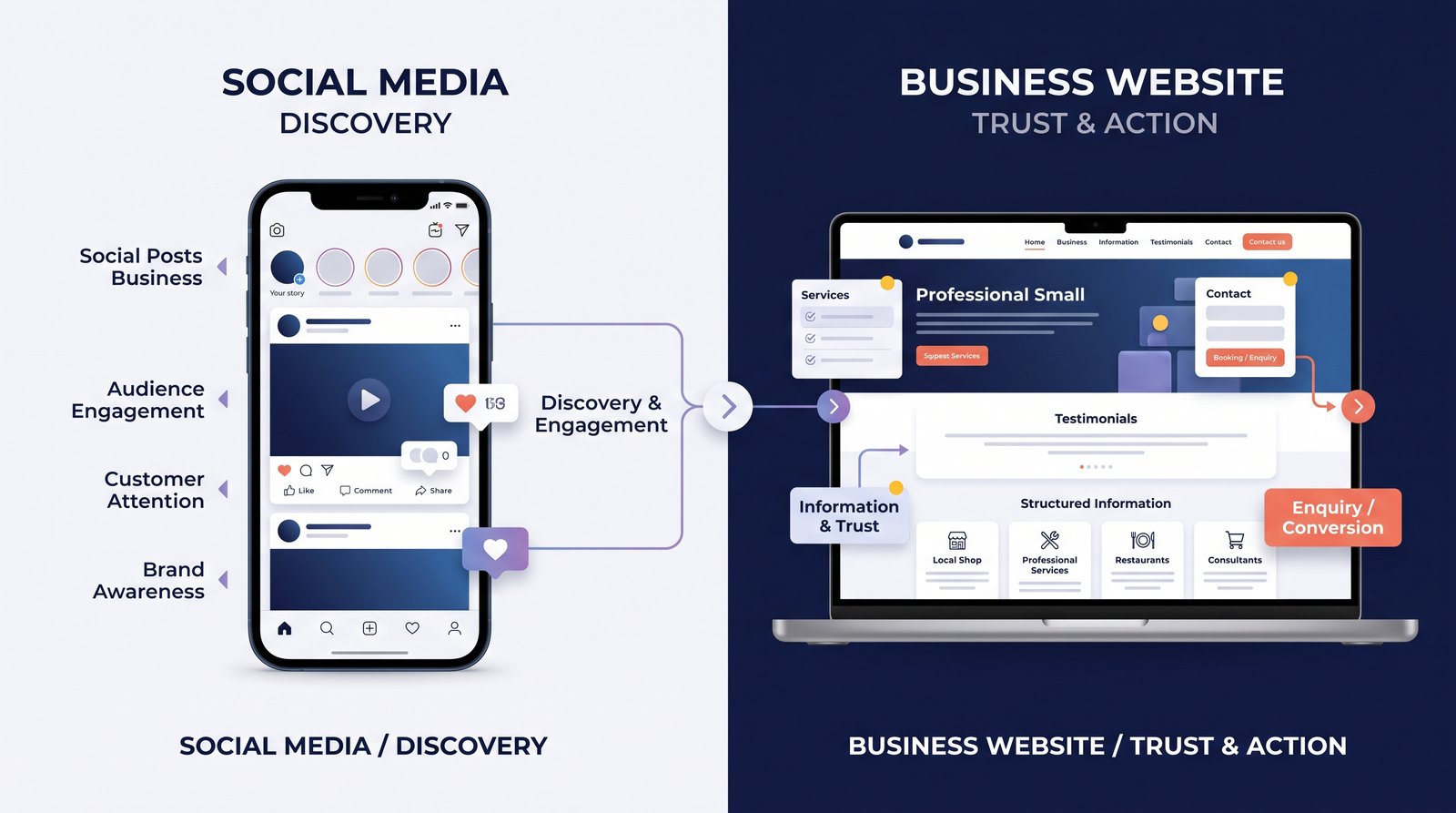
- Build a Useful Local Website
A Google Business Profile alone is not enough for most businesses.
- Your website should clearly explain:
What do you offer?
Where do you operate?
Who do you serve?
How can someone contact you?
For a Kathmandu-based business, location information should be naturally integrated into relevant pages.
This does not mean repeating "Kathmandu" in every sentence.
Instead, use useful location context where it genuinely helps the reader.
- Create Service and Location-Relevant Pages
A business that provides multiple services may benefit from having dedicated service pages.
For example, instead of placing every service on a single generic page, a company could have separate pages explaining what each service involves.
A local business may also need location-specific content when it genuinely serves distinct areas.
The purpose should be to answer real customer questions—not to create dozens of pages with slightly different versions of the same text.
- Write Content for Local Customers
Local content does not always need to be a city guide.
Useful content can answer questions that local customers actually have.
- For example:
How much does a business website cost in Kathmandu?
What should a Kathmandu restaurant include on its website?
How can a local business generate more enquiries from Google?
What should I look for when choosing a digital agency in Kathmandu?
These topics combine useful information with local search intent.
- Reviews Matter
Customer reviews can strongly influence how people evaluate a local business.
Ask genuine customers to leave honest feedback after a completed purchase, project, appointment, or service.
Do not write fake reviews or pressure people into giving specific ratings.
A natural review profile with detailed customer experiences is more useful than a collection of vague five-star comments.
Businesses should also respond professionally to reviews, including negative ones.
- Use Real Photos
Real images can make a local business profile and website more trustworthy.
- Depending on the business, useful images might include:
- Office or storefront
- Team members
- Products
- Completed projects
- Equipment
- Interior spaces
- Work in progress
For local businesses, authentic visuals can help potential customers understand what they are actually choosing.
- Build Relevant Local Citations
A citation is a mention of a business's information on another website or directory.
- Relevant citations can include:
- Local business directories
- Industry directories
- Professional associations
- Local publications
- Trusted business listings
Quality matters more than quantity.
Adding a business to dozens of unrelated directories does not automatically create a strong local SEO strategy.
- Don't Ignore Technical SEO
Local SEO still depends on a healthy website.
- Important basics include:
- Mobile-friendly design
- Fast loading
- Secure HTTPS connection
- Clear navigation
- Search-friendly page structure
- Descriptive page titles
- Useful internal links
- Proper image optimization
A local customer should not struggle to open your website or find your contact details.
- Measure the Right Results
Do not judge local SEO only by rankings.
Look at whether the strategy is helping the business receive useful actions, such as:
- Website visits
- Phone calls
- Direction requests
WhatsApp enquiries
- Contact form submissions
- Bookings
- Qualified leads
The objective is not simply to appear in search results. It is to attract people who are genuinely relevant to the business.
- Common Local SEO Mistakes
- Keyword Stuffing
Repeating a city name excessively does not make content more useful.
- Fake Reviews
Fake or manipulated reviews can damage trust and create serious business reputation problems.
- Inconsistent Contact Information
Different addresses or phone numbers across online listings can cause confusion.
- Ignoring Mobile Users
Many local searches happen while people are actively looking for a nearby product or service. A poor mobile experience can lose those visitors quickly.
- Creating Thin Location Pages
Creating many pages that contain almost identical text except for the city name provides little value to users.
- A Practical Local SEO Checklist
- A Kathmandu business can start with these basics:
- Google Business Profile
Keep it complete and accurate.
- Website
Clearly explain services, location, and contact options.
- Reviews
Encourage genuine customer feedback.
- Business Listings
Maintain consistent information on relevant platforms.
- Local Content
Answer questions that matter to local customers.
- Technical SEO
Keep the website fast, secure, mobile-friendly, and easy to navigate.
- Measurement
Track calls, enquiries, bookings, and other meaningful actions.
These foundations provide a much stronger starting point than trying to chase rankings with shortcuts.
Frequently Asked Questions
Not every business needs the same level of local optimization. It is particularly valuable for businesses that serve customers in a specific geographic area.
It is important, but it works best as part of a broader presence that includes a useful website, consistent business information, reviews, and relevant local content.
Results vary depending on competition, website quality, business history, content, reviews, and other factors. Local SEO is generally a long-term process rather than an overnight campaign.
No. Use location information naturally where it helps customers understand the business. Repetition for its own sake can make content less useful.
Yes, particularly for specific services and geographic searches. A smaller business can focus on its actual service area, reputation, expertise, and customer experience rather than trying to compete for every broad search.
Final Thoughts
Local SEO is fundamentally about helping the right people discover the right business at the right time.
For Kathmandu businesses, that means making it easy for customers to understand what you offer, where you operate, how they can contact you, and why they should consider your business.
A complete Google Business Profile, accurate business information, a useful website, genuine reviews, relevant local content, and good technical foundations can create a strong local search presence.
The focus should always remain on helping customers—not simply adding more keywords to a page.