Starting a new business is exciting, but getting people to notice it can be difficult.
A good product or service is only one part of the equation. Potential customers also need to know that your business exists, understand what you offer, and feel confident enough to contact or buy from you.
For many new businesses, building an online presence is one of the most practical ways to become visible and start attracting the right audience.
The good news is that you do not need to be everywhere at once.
A strong online presence usually comes from getting a few important foundations right and then building consistently around them.
- Start With a Clear Business Identity
Before creating accounts, websites, and advertisements, make sure the business identity is clear.
- Customers should be able to recognize:
- Business name
- Main products or services
- Target audience
- Location or service area
- Brand positioning
Your website and social media profiles should communicate the same basic identity.
When the information changes from one platform to another, customers can become confused about what the business actually offers.
- Build a Professional Website
For most businesses, the website should be the central point of the online presence.
A website can provide information that is difficult to organize on social media alone.
- Useful pages may include:
- Homepage
Explain what the business does and who it serves.
- About Page
Tell customers who is behind the business and why it exists.
- Services or Products
Clearly explain what you offer.
- Contact Page
Make it easy to call, email, message, or request information.
- FAQ
Answer common customer questions before they need to ask.
The exact number of pages depends on the business.
The important thing is that every page has a clear purpose.
- Claim and Complete Your Google Business Profile
For businesses that serve a specific location, a Google Business Profile can be an important part of online visibility.
- Make sure the profile includes accurate:
- Business name
- Address
- Phone number
- Website
- Opening hours
- Category
- Business description
- Photos
Keep the information updated as the business changes.
A profile that has outdated hours or incorrect contact details can create a poor customer experience.
- Choose Social Media Platforms Carefully
A new business does not need to create ten social media accounts.
Start with the platforms where the target audience is most likely to spend time.
- For example:
Instagram may be useful for visual brands.
Facebook can be useful for local communities and broad consumer audiences.
LinkedIn is often relevant for B2B services and professional businesses.
TikTok can be useful when short-form video suits the audience and brand.
The goal is not to collect profiles.
The goal is to build useful communication channels.
- Keep Branding Consistent
Your website, social profiles, advertisements, and business listings should feel like they belong to the same company.
- Keep consistent:
- Logo
- Brand colors
- Typography
- Tone of voice
- Business description
- Contact information
Customers should recognize your business even when they encounter it on different platforms.
- Create Useful Content
Publishing content can help potential customers understand your business before they contact you.
- Content might include:
- Educational articles
- Short videos
- Product demonstrations
- FAQs
- Case studies
- Tips
- Industry updates
- Customer stories
Not every post needs to sell something.
Useful content can build familiarity and trust over time.
For example, a digital agency might publish a guide explaining how businesses can improve their websites instead of posting only promotional offers.
- Make Your Business Easy to Contact
Once someone becomes interested, do not make them search for the next step.
- Provide clear options such as:
- Call
- Contact form
- Book an appointment
- Request a quote
The best option depends on how your customers prefer to communicate.
A simple business website with an easy-to-find WhatsApp button may generate more conversations than a website with a complicated contact process.
- Build Trust With Real Information
New businesses often face a trust gap.
- Customers may ask:
Is this a real business?
Can I trust them?
Have they helped anyone before?
- Useful trust signals can include:
- Real business address
- Contact details
- Team information
- Client testimonials
- Portfolio or completed projects
- Certifications where relevant
- Clear policies
Do not manufacture credibility.
Real information is more useful than exaggerated claims.
- Start Collecting Genuine Reviews
When you complete a successful sale or project, consider asking the customer for an honest review.
Reviews can help future customers understand what working with the business is actually like.
Keep the process natural.
Do not pressure customers to leave a specific rating or write a predetermined review.
Responding professionally to feedback is also an important part of reputation management.
- Make Search Visibility Part of the Plan
Search engines can help potential customers discover the business when they are actively looking for products or services.
- Basic SEO foundations include:
- Clear page titles
- Useful headings
- Search-friendly URLs
- Relevant content
- Internal links
- Mobile-friendly pages
- Fast loading
- Descriptive image text
- Useful local information where appropriate
SEO should support helpful content rather than turning pages into collections of repeated keywords.
- Use Paid Advertising Carefully
Paid advertising can help a new business reach people more quickly, but it should not replace the basic foundations.
- Before running ads, make sure:
- The offer is clear
- The landing page works
- Contact options are easy to find
- Tracking is configured
Otherwise, the business may end up paying for traffic without having a strong system for converting that traffic into enquiries or sales.
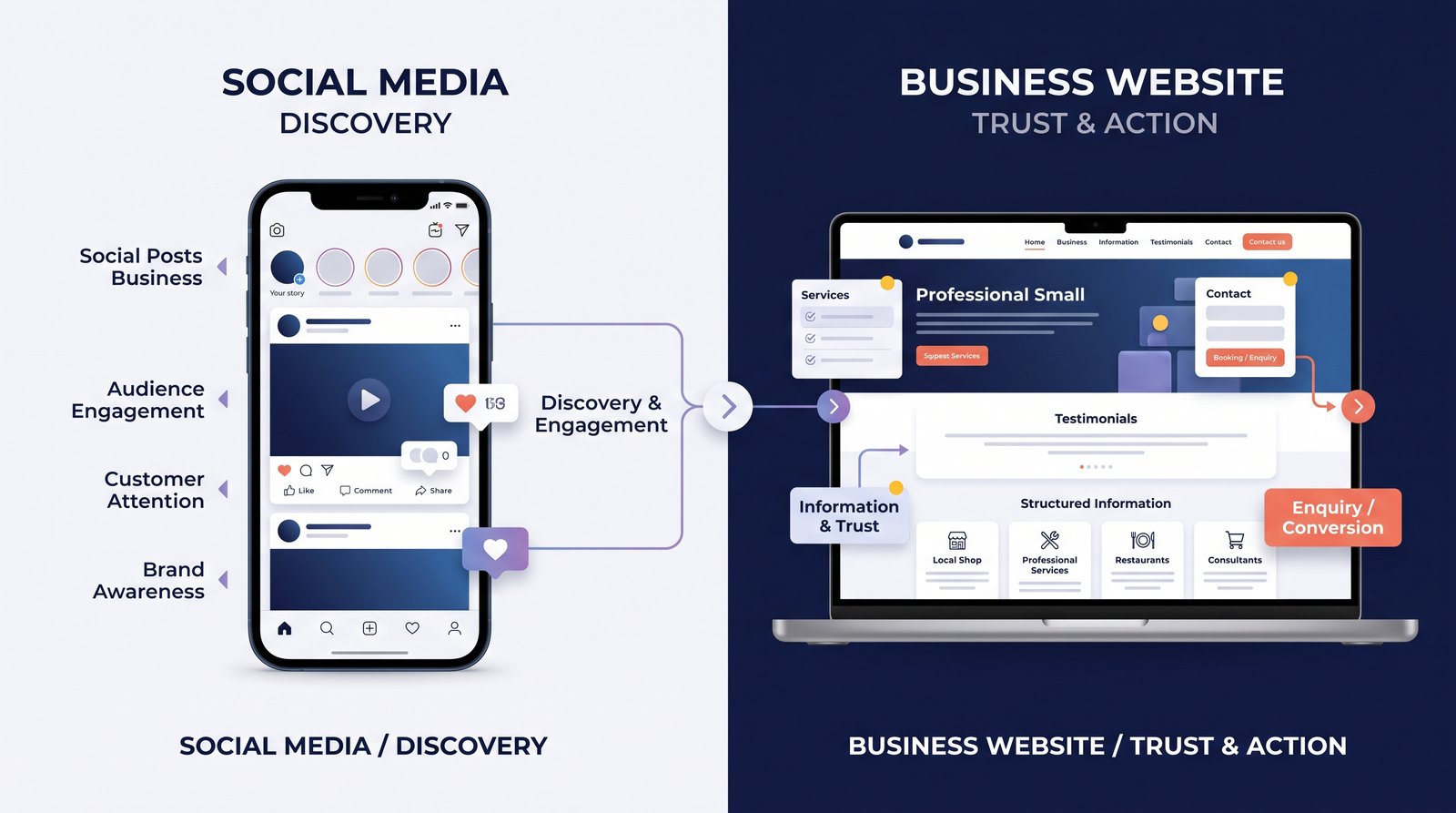
- Connect Your Channels
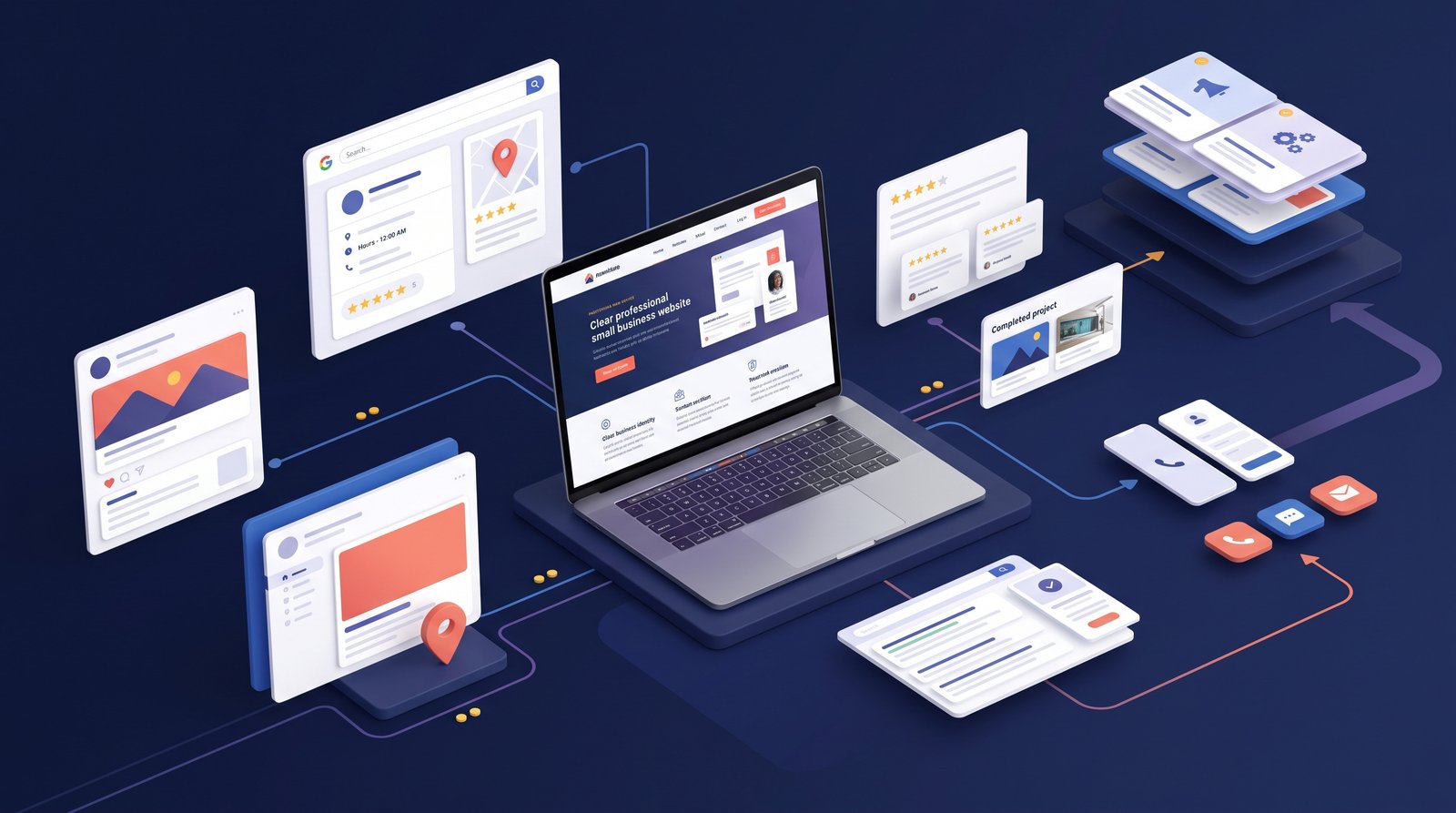
A strong online presence works best when the different channels support one another.
- For example:
- Social Media
- ↓
- Website
- ↓
- Service / Product Page
- ↓
WhatsApp or Contact Form
- ↓
- Sales Conversation
Each channel has a role.
Social media can attract attention.
The website can provide detailed information.
WhatsApp or a contact form can start the conversation.
- Do Not Try to Grow Everything at Once
One of the most common mistakes new businesses make is trying to maintain:
- Multiple social platforms
- Daily blog posts
- Paid advertising
- Email marketing
- Video content
- SEO
- Influencer marketing
all at the same time.
That often results in inconsistent execution.
A better approach is to build a few strong foundations first.
- For example:
- Website + Google Business Profile + One or Two Social Platforms
Then expand once the process becomes manageable.
- Track What Is Actually Working
An online presence should be measured using meaningful business signals.
- Depending on the business, track:
- Website enquiries
- Phone calls
WhatsApp conversations
- Form submissions
- Bookings
- Purchases
- Qualified leads
Do not focus only on followers or impressions.
A smaller audience that regularly becomes customers may be more valuable than a large audience with little commercial impact.
- Common Mistakes New Businesses Make
- Creating Profiles and Abandoning Them
An inactive business profile can make the company appear less established.
- Using Different Information Everywhere
Inconsistent phone numbers, addresses, or business names can create confusion.
- Posting Only Promotional Content
People are more likely to engage with content that helps them, not just advertisements.
- Building a Website Without a Clear CTA
Visitors should always know what the next step is.
- Trying to Copy Competitors
Your online presence should reflect your own business rather than simply copying another company's style.
- A Practical Starting Plan
A new business can build its online presence in stages.
- Stage 1
- Create:
- Professional website
- Google Business Profile
- Relevant social media profiles
- Stage 2
- Add:
- Useful content
- Customer reviews
- Portfolio or case studies
- Basic SEO
- Stage 3
- Introduce:
- Paid advertising
- Lead automation
- Email or WhatsApp workflows
- More advanced analytics
This approach allows the business to improve gradually instead of trying to build everything on the first day.
Frequently Asked Questions
Not every business needs the same website, but a professional website can provide a central, controlled place for customers to learn about the business and take action.
Start with the platforms that are relevant to your audience and that you can manage consistently. Quality is generally more useful than creating inactive profiles everywhere.
It can be particularly useful for businesses that serve customers in a specific geographic area because it makes important business information easier to discover in local search.
Not necessarily. First make sure the offer, website, landing page, contact process, and tracking are ready.
There is no fixed timeline. A basic foundation can be created relatively quickly, but building visibility, content, trust, and search presence takes ongoing effort.
Final Thoughts
A strong online presence is not about being everywhere.
It is about making it easy for the right people to discover your business, understand what you offer, trust you, and take the next step.
Start with a clear website, accurate business information, a few relevant communication channels, useful content, and a reliable way to handle enquiries.
Then build from there.
Consistency matters more than trying to create everything at once.