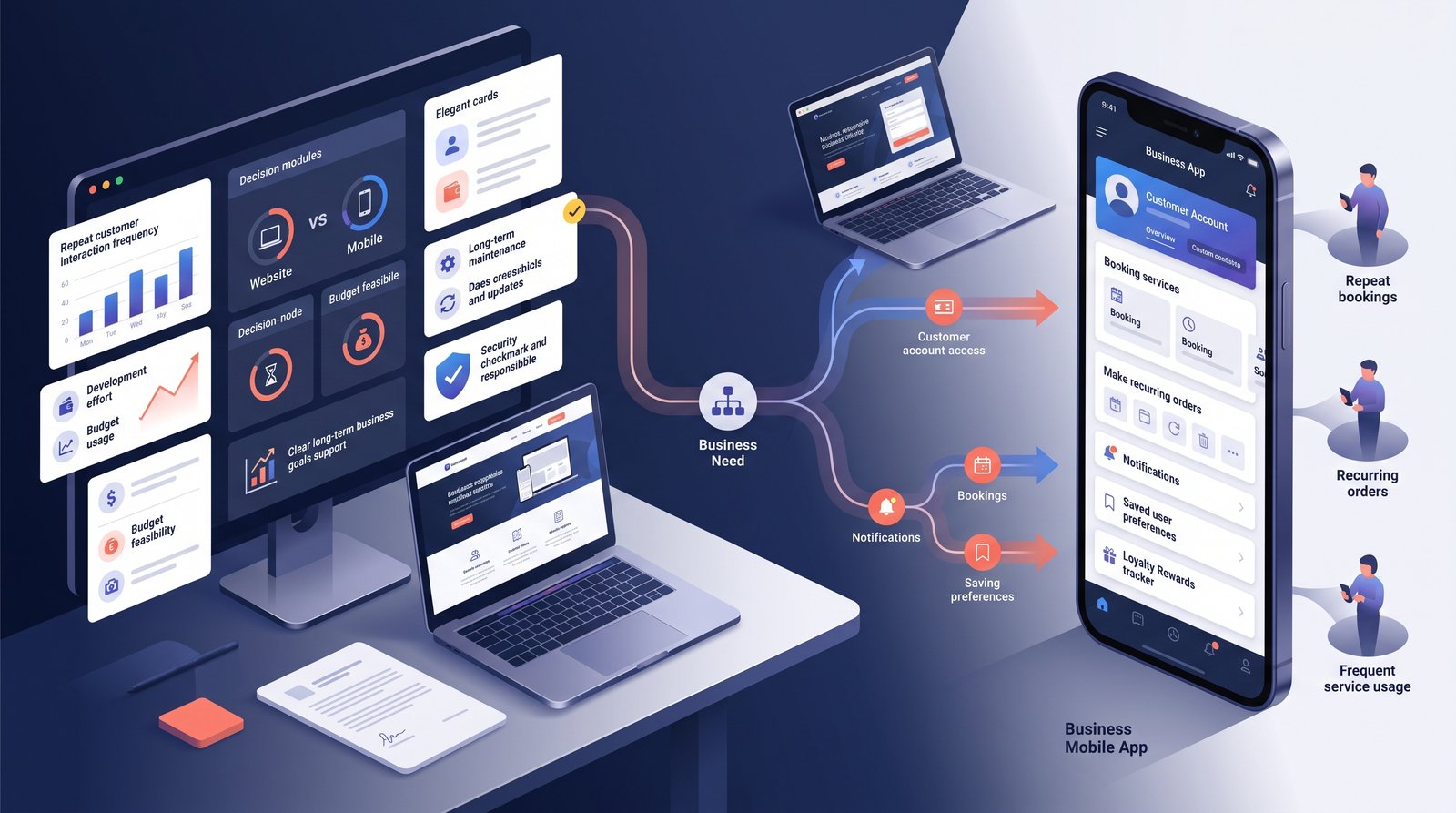
Mobile apps can create powerful customer experiences, but not every business needs one.
For some companies, an app can make repeat purchases easier, improve customer engagement, simplify bookings, or support services that people use frequently from their phones. For others, a responsive website may already provide everything customers need.
The mistake is deciding to build an app simply because competitors have one or because mobile apps seem more advanced.
Before investing in mobile app development, a business should first understand whether an app solves a real customer or operational problem.
Here are seven questions worth asking before making that decision.
## 1. Will Customers Use Your Service Frequently?
Frequency is one of the strongest reasons to consider a mobile app.
People are more likely to install an app when they expect to use the service regularly.
- Examples can include:
- * Food delivery
- * Online learning
- * Banking and financial services
- * Fitness platforms
- * Booking services
- * Transportation
- * E-commerce with repeat purchases
- * Customer loyalty programs
- * Business productivity tools
If a customer only needs your service once or twice a year, asking them to install an app may create unnecessary friction.
A well-designed mobile website may be more practical.
## 2. Does the App Make Something Easier Than Your Website?
An app should provide a meaningful improvement to the customer experience.
- Ask:
**What will users be able to do more easily through the app?**
- Possible advantages may include:
- * Faster repeat access
- * Saved preferences
- * Personalized dashboards
- * Booking history
- * Order tracking
- * Push notifications
- * Loyalty points
- * Mobile-specific workflows
- * Easier account management
If the app simply copies the same information already available on the website without improving the experience, the business may struggle to convince customers to install it.
## 3. Do You Need Mobile-Specific Features?
Some business ideas become more valuable when they can use features available on a smartphone.
- Depending on the project, that may include:
- * Camera access
- * GPS/location
- * Push notifications
- * Biometric authentication
- * QR scanning
- * Offline access
- * Device storage
- * Real-time location tracking
For example, a delivery platform may benefit significantly from GPS functionality.
A simple corporate website probably does not.
The need for mobile-specific features can help determine whether an app is genuinely appropriate.
## 4. Do You Have Enough Repeat Customers?
Developing an app is only part of the challenge.
The business also needs people to install and continue using it.
A company with an established base of repeat customers may have a clearer opportunity than a new business that is still trying to generate basic awareness.
For example, an online learning business may have students returning every week to:
- * Watch lessons
- * Complete assignments
- * Track progress
- * Receive notifications
An app could make that repeated interaction more convenient.
A consulting company whose customers mainly visit the website to request an occasional quotation may not receive the same value.
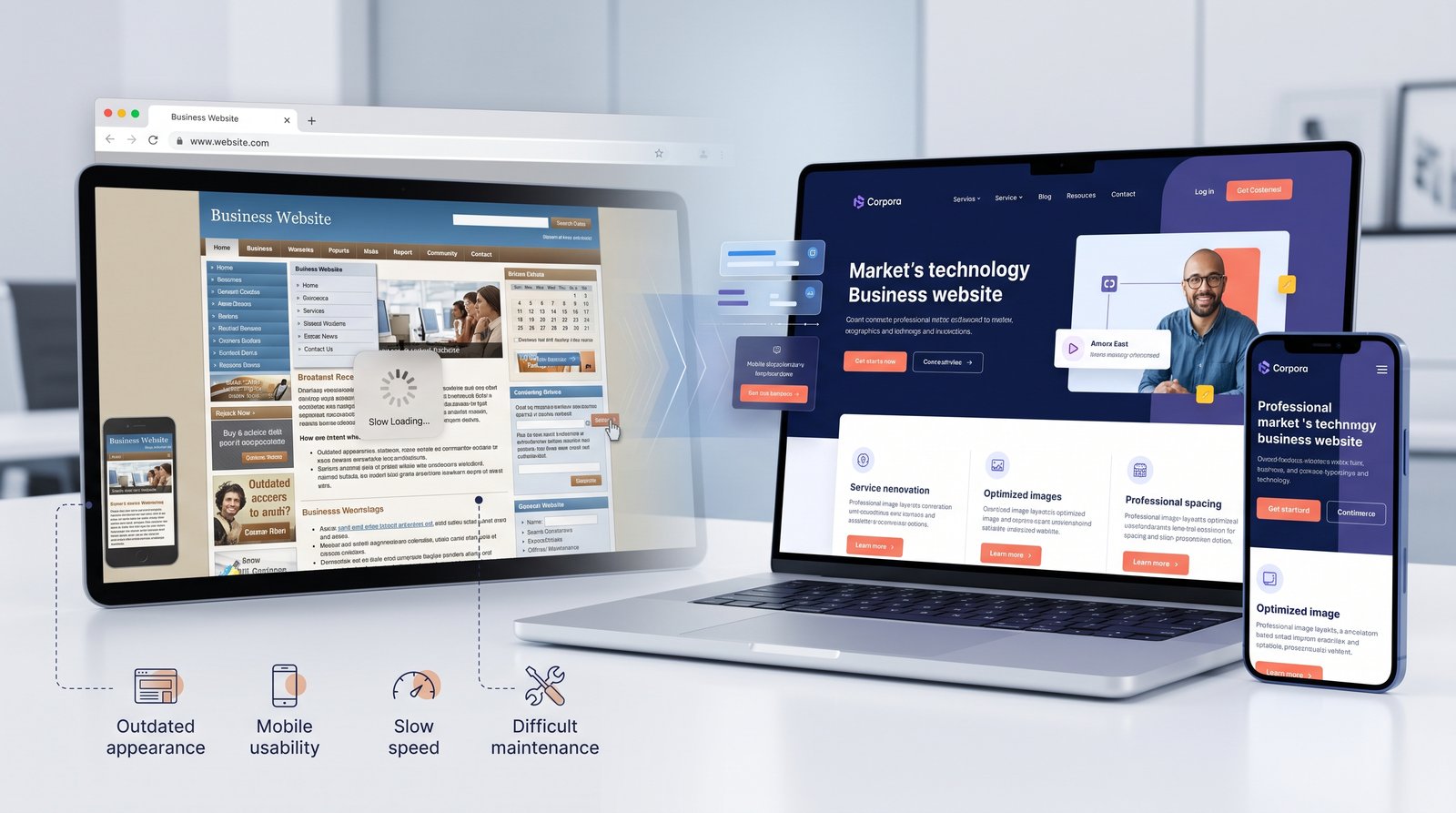
## 5. Is Your Current Website Already Mobile-Friendly?
Before building an app, review the existing mobile website.
- Ask:
* Does it load quickly?
* Is navigation easy?
* Can customers complete important actions?
* Can they place orders?
* Can they book?
* Can they contact the business?
* Does the website work comfortably on a phone?
Sometimes the real problem is not that the business lacks an app.
It may simply have a poor mobile website.
Improving the website can sometimes solve the customer-experience problem at a much lower level of complexity.
## 6. Can the Business Support Ongoing App Maintenance?
A mobile app is not a one-time project.
- After launch, businesses may need to manage:
- * Bug fixes
- * Operating system updates
- * Security improvements
- * Backend maintenance
- * Feature updates
- * App store requirements
- * User feedback
- * Performance monitoring
If both Android and iOS versions are involved, testing and maintenance requirements can also increase.
A business should consider the ongoing operational commitment before deciding to build.
## 7. What Business Result Should the App Produce?
An app should have a clear purpose.
- Possible business objectives might include:
- * Increase repeat purchases
- * Improve customer retention
- * Reduce booking friction
- * Improve service delivery
- * Increase customer engagement
- * Support field employees
- * Reduce manual operations
- * Provide a paid digital service
Without a clear goal, development can turn into a feature-building exercise without measurable business value.
- Instead of asking:
- **“Should we build an app?”**
- ask:
- **“What problem should this app solve?”**
That question usually leads to a better decision.
- ## Mobile App vs Responsive Website
A responsive website works through a browser and adapts to different screen sizes.
A mobile app is installed on the user's device.
Both can provide strong mobile experiences, but they serve different needs.
- ### A Responsive Website May Be Better When:
- * Customers visit occasionally
- * Search visibility is important
- * You need broad accessibility
- * Users should not need to install anything
- * The main purpose is information or lead generation
- * Budget and maintenance need to remain relatively simple
- ### A Mobile App May Be Better When:
- * Customers return frequently
- * Personalization is important
- * Mobile-specific device features are useful
- * Push notifications provide real value
- * Customers manage accounts or transactions regularly
- * The service itself is built around repeat mobile interaction
- ## Native vs Cross-Platform Apps
- If a business decides to build an app, another question appears:
- **How should it be developed?**
Two common approaches are native development and cross-platform development.
- ### Native Apps
Native applications are built specifically for an operating system.
- Advantages may include:
- * Strong platform integration
- * Access to device capabilities
- * Optimized platform-specific experience
However, building separately for multiple platforms can increase development and maintenance effort.
- ### Cross-Platform Apps
Cross-platform development allows much of the application code to be shared across platforms.
This can be useful when a business wants to support multiple operating systems while maintaining a more unified development process.
- The right choice depends on:
- * Features
- * Performance requirements
- * Budget
- * Timeline
- * Team expertise
- * Long-term maintenance needs
There is no universal best option.
## What About Progressive Web Apps?
A Progressive Web App, or PWA, can offer some app-like functionality through web technology.
- Depending on the implementation, users may be able to:
- * Add the experience to their home screen
- * Access certain features without a traditional app-store installation
- * Use portions of the service offline
- * Receive an app-like interface
PWAs can be useful in some situations, but they do not provide every capability available to native mobile applications.
They should be considered as another technical option rather than a universal replacement for mobile apps.
- ## When an Internal Business App Makes Sense
Not every mobile app needs to be customer-facing.
Businesses may build mobile tools for employees.
- Examples include:
- * Field service reporting
- * Delivery management
- * Staff attendance
- * Inventory updates
- * Sales reporting
- * Site inspections
- * Task management
For employees who work away from a desktop computer, a mobile app can simplify internal operations.
In this situation, the business value comes from productivity rather than customer acquisition.
- ## Common Reasons Businesses Build Apps for the Wrong Reasons
- ### “Our Competitor Has One”
A competitor's strategy may not match your customer base or business model.
- ### “An App Looks More Professional”
Customers care more about usefulness than the existence of an app.
- ### “Everyone Uses Mobile Phones”
That does not mean everyone wants to install an app for every business they interact with.
- ### “We Can Add Every Feature Later”
More features increase complexity and maintenance.
Start with the core problem.
- ### “Once We Launch, People Will Download It”
App adoption usually requires its own marketing and customer-education strategy.
- ## Start With a Minimum Viable Product
If the business case is strong, you do not necessarily need to build every feature immediately.
A Minimum Viable Product, or MVP, focuses on the features necessary to solve the main problem.
- For example, instead of launching with:
- * Social feeds
- * Loyalty programs
- * Advanced analytics
- * Multiple payment systems
- * Referral programs
- * Complex personalization
- the first version might focus only on:
- **Account → Booking → Payment → Confirmation**
Once real users begin using the app, the business can learn which improvements actually matter.
- ## Consider the Backend Too
The visible mobile application is only one part of many app projects.
- An app may also require:
- * Database
- * Authentication
- * APIs
- * Admin dashboard
- * Payment integration
- * Notification system
- * Analytics
- * Cloud infrastructure
Businesses should therefore consider the complete system rather than budgeting only for the mobile interface.
- ## Security and Privacy
- Mobile applications can handle sensitive information such as:
- * Names
- * Contact details
- * Locations
- * Account information
- * Payment-related data
Security and privacy should therefore be planned from the beginning.
- Depending on the type of application, this may involve:
- * Secure authentication
- * Encrypted connections
- * Access controls
- * Secure backend architecture
- * Data-minimization practices
- * Appropriate privacy policies
Apps involving healthcare, financial, or other sensitive information may require additional consideration.
- ## How to Decide: A Simple Framework
- Consider building an app if several of these statements are true:
- * Customers use your service frequently
- * An app makes important tasks significantly easier
- * You need mobile-specific device features
- * You have an established or growing repeat user base
- * You have a clear business goal
- * You can support ongoing maintenance
- * Your backend systems are ready or can be built
If very few apply, improving your website may be a better first investment.
Frequently Asked Questions
No. Many businesses can meet their customers' needs effectively with a responsive website.
It depends on the target audience and device usage. A business should evaluate its actual users before deciding which platforms to support.
It can be, especially when the project requires multiple platforms, backend systems, user accounts, notifications, payments, or ongoing maintenance. The actual cost depends on the requirements.
Yes. Many businesses begin with a website, learn how customers use the service, and later build an app when there is a clear reason to do so.
A mobile app is typically installed on a device, while a web app runs through a browser. Their capabilities and architecture can vary significantly depending on the project.
Not necessarily. The decision should be based on your target audience, budget, required features, and development strategy.
Final Thoughts
A mobile app can be a valuable business tool, but only when it solves a real problem.
The decision should not begin with design, technology, or competitors.
Start with the user.
Ask how often they interact with the business, what they need to accomplish, and whether an app would make that experience meaningfully better.
If the answer is yes, mobile app development may be worth exploring.
If the answer is unclear, improving the website, customer journey, or existing digital systems may create more value first.
The best digital investment is not the most advanced one.
It is the one people actually need and use.