Digital marketing is not one single service.
A business can invest in search engine optimization, social media, paid advertising, content, email, or several of them at the same time. But using more channels does not automatically produce better results.
The challenge is choosing the channels that match your customers, your business model, your budget, and the action you want people to take.
A local restaurant, an online store, a software company, and a professional service business may need completely different digital marketing strategies.
- Start With the Customer
Before choosing a marketing channel, understand who you are trying to reach.
- Ask:
Who is our ideal customer?
What problem are they trying to solve?
Where do they search for information?
What influences their decision?
How do they prefer to contact a business?
These questions help determine where marketing efforts should be focused.
For example, a local service business may benefit heavily from local search and Google Business Profile optimization, while a visually driven consumer brand may get more value from social media content.
- Define One Clear Business Goal
Digital marketing becomes difficult to manage when every campaign is expected to achieve everything.
- Choose a primary objective such as:
- Generate enquiries
- Increase online sales
- Build brand awareness
- Increase website traffic
- Generate qualified leads
- Promote a new service
- Increase bookings
Once the objective is clear, it becomes easier to select the appropriate marketing channels and metrics.
- SEO: Useful for Long-Term Search Visibility
Search engine optimization can help a business attract people who are actively searching for relevant information, products, or services.
- SEO often involves:
- Keyword research
- Content creation
- Technical optimization
- Internal linking
- On-page improvements
- Local SEO
- Authority building
One advantage of SEO is that useful pages can continue attracting search traffic over time.
However, SEO is rarely an overnight strategy.
Businesses should think in terms of building a useful search presence rather than expecting immediate results from a few keywords.
- Paid Ads: Useful When Speed Matters
Paid advertising can help a business reach potential customers more quickly than waiting for organic visibility to develop.
- Depending on the audience and business model, advertising might include:
- Google Ads
- Meta Ads
- Social media advertising
- Display campaigns
- Remarketing
Paid campaigns can be effective when the offer, targeting, creative, landing page, and tracking are all properly aligned.
The key is to measure business outcomes rather than simply counting clicks.
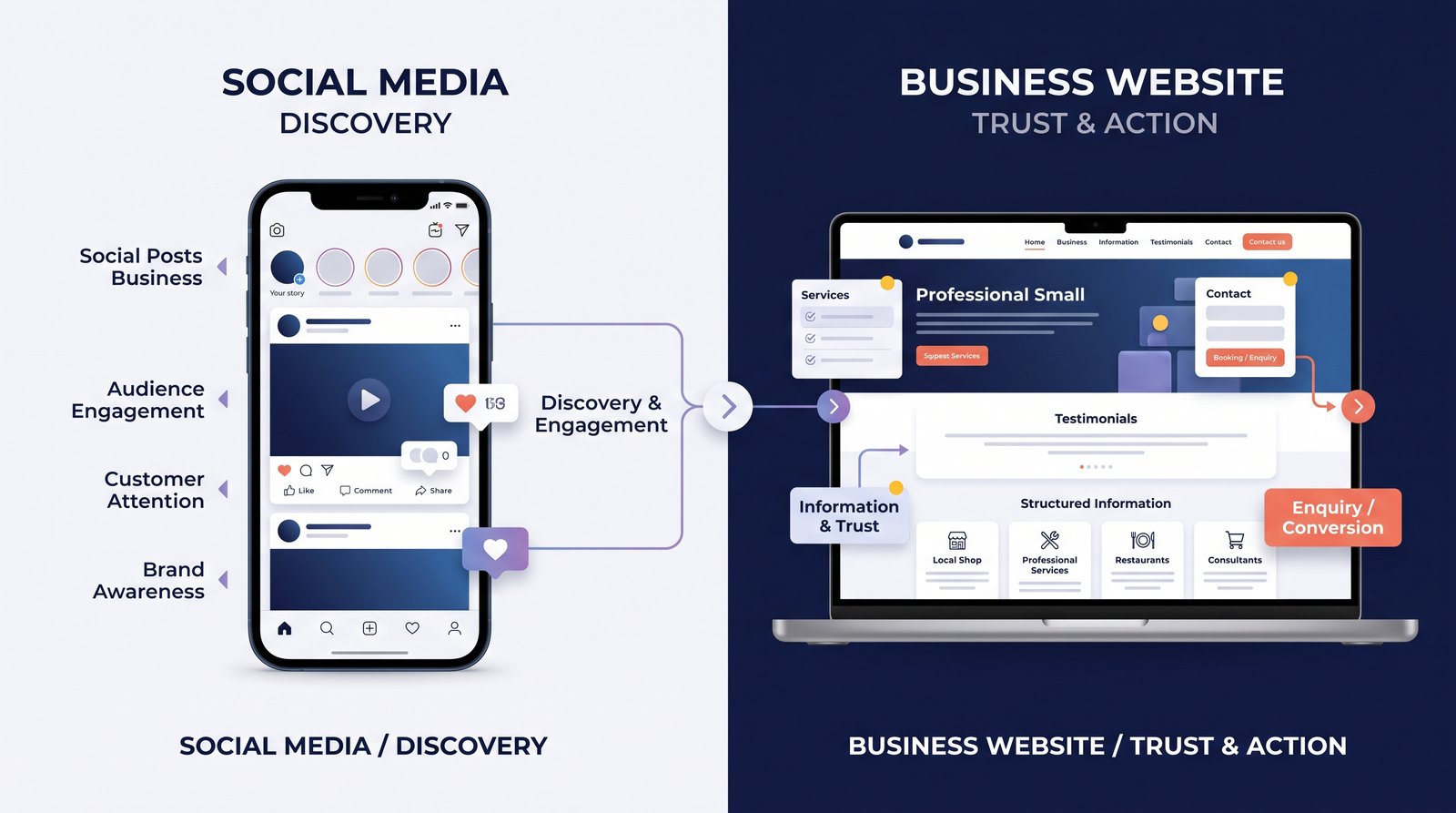
- Social Media: Build Attention and Relationships
Social media can help businesses remain visible and communicate with customers regularly.
- Useful content might include:
- Educational posts
- Product demonstrations
- Short videos
- Customer stories
- Behind-the-scenes content
- Industry insights
- Offers and announcements
The right platform depends on where your target audience actually spends time.
A business does not necessarily need to maintain every social media profile.
- Content Marketing: Answer Questions Before They Become Objections
Content can help potential customers understand a business before making contact.
- Useful content includes:
- Blog articles
- Guides
- FAQs
- Case studies
- Comparisons
- Tutorials
- Checklists
- For example, someone considering a website project may first search for:
How much does a business website cost?
An informative article can answer that question while introducing the business as a potential solution provider.
This makes content useful not only for SEO but also for customer education.
- Local Marketing: Important for Location-Based Businesses
Businesses that serve specific geographic areas should consider local marketing.
- Useful activities can include:
- Google Business Profile optimization
- Local SEO
- Genuine customer reviews
- Local website content
- Consistent business information
- Relevant local listings
A business serving Kathmandu does not need to compete for every national search query.
Focusing on relevant local intent can be much more practical.
WhatsApp and Direct Messaging
For businesses whose customers prefer messaging, WhatsApp can play an important role in converting interest into conversation.
- A marketing campaign can direct people to:
- Website → WhatsApp
- or:
- Ad → WhatsApp
This can be useful for services where customers want to ask questions before purchasing.
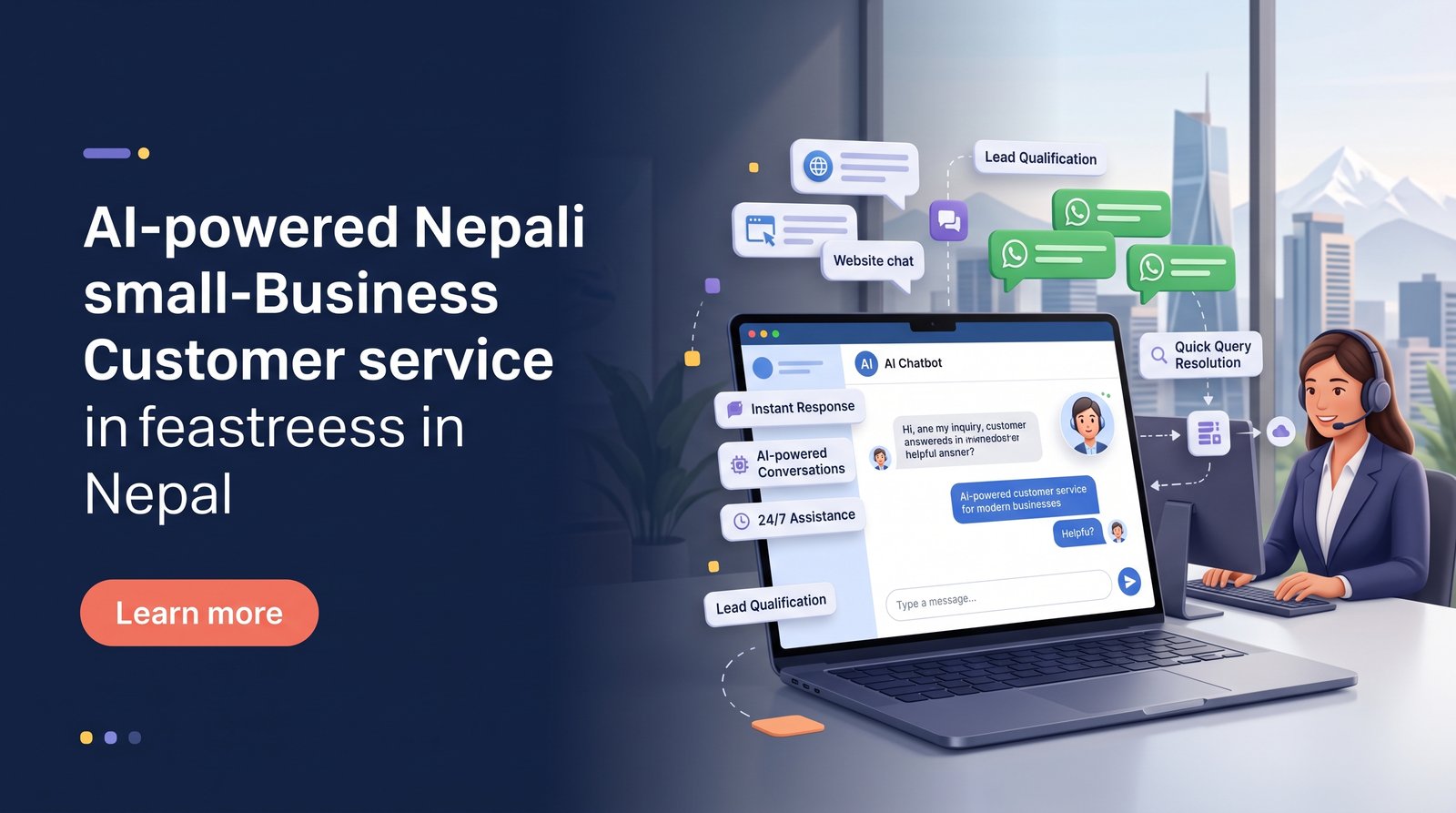
Automation can also help handle routine enquiries, but businesses should make sure customers can reach a real person when needed.
- Your Website Connects the Strategy
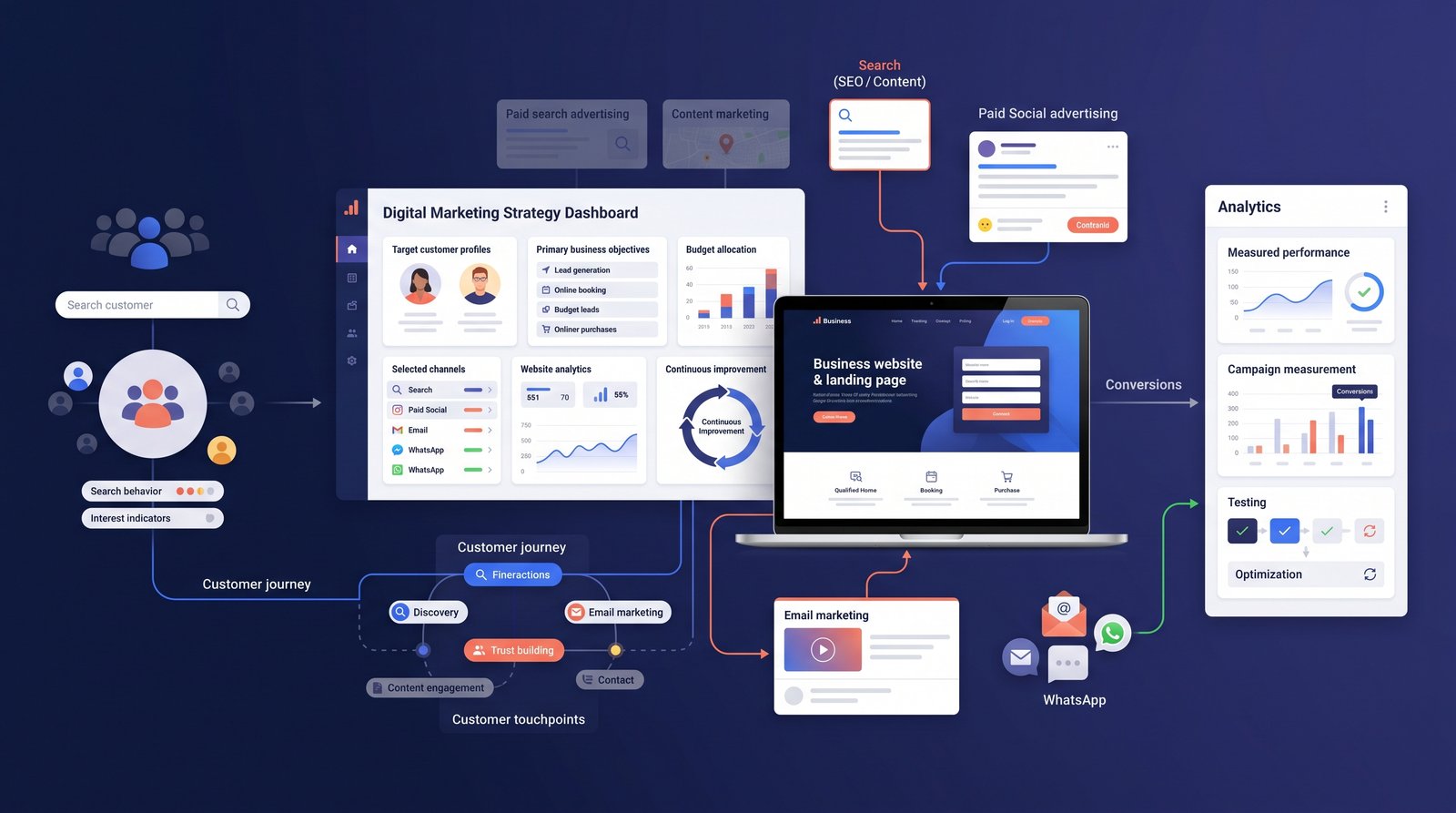
Different marketing channels should not operate independently.
- Consider this journey:
- Google Search
- ↓
- Website Service Page
- ↓
- Trust / Information
- ↓
- Contact or WhatsApp
- ↓
- Lead
- Or:
- ↓
- Landing Page
- ↓
- Offer
- ↓
- Enquiry
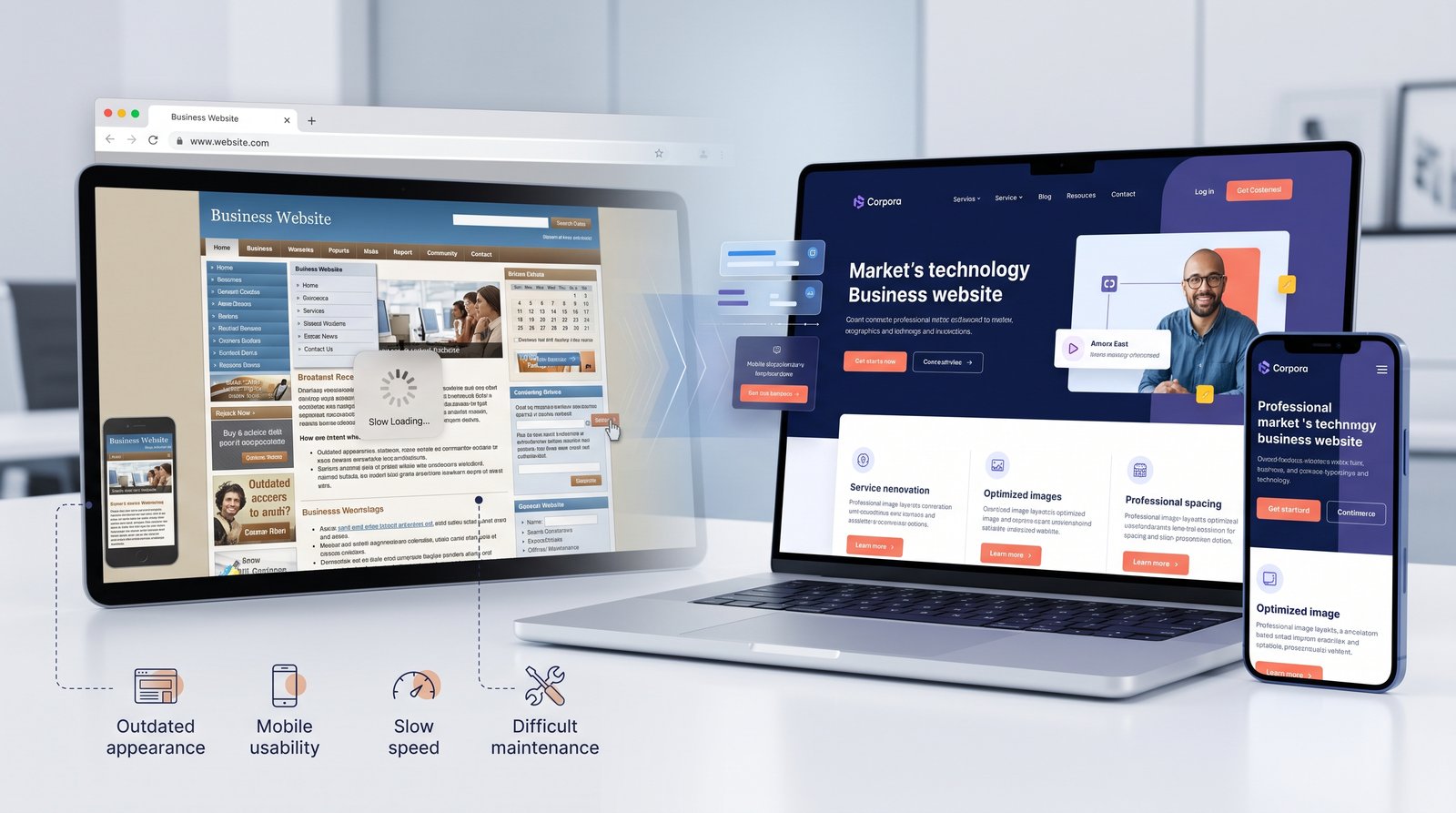
The website often acts as the central destination where visitors learn more and decide what to do next.
That is why marketing and website strategy should be considered together.
- Choose Channels Based on the Customer Journey
A customer may not buy immediately after the first interaction.
- They might:
- Discover the brand
- Visit the website
- Read an article
- Compare alternatives
- Follow the social account
- Return later
- Contact the business
A good strategy supports this journey rather than expecting one advertisement or one social media post to produce an instant sale.
- Avoid Spreading the Budget Too Thin
A business with a limited budget may make the mistake of trying to run:
- SEO
- Google Ads
- Meta Ads
- TikTok
- Influencer campaigns
all at the same time.
The result can be weak execution everywhere.
It is often better to choose a few channels that match the business and execute them properly.
Once the strategy produces useful data, additional channels can be tested.
- Measure Business Results
- Different channels have different metrics, but the final question is:
Is the marketing helping the business?
- Depending on the objective, useful metrics may include:
- Qualified leads
- Cost per lead
- Website conversions
- Bookings
- Sales
- Revenue
- Return on ad spend
- Customer acquisition cost
Followers and impressions can provide context, but they should not be the only measures of success.
- Test and Improve
Digital marketing is not a one-time setup.
- A useful process is:
- Launch
- ↓
- Measure
- ↓
- Identify what is working
- ↓
- Adjust
- ↓
- Test again
For example, you might test two different advertisements, two landing pages, or two offers.
The goal is to learn from actual customer behavior rather than relying entirely on assumptions.
- Common Digital Marketing Mistakes
- Trying Every Channel at Once
More channels do not automatically mean more customers.
- Focusing Only on Traffic
Traffic is useful when it produces meaningful actions.
- Ignoring the Website
Marketing can drive visitors, but the website still needs to convert interest into action.
- Using the Same Message Everywhere
Different audiences may respond to different messages and formats.
- Expecting Immediate SEO Results
SEO typically requires consistency and time.
- Failing to Track Leads
Without proper tracking, it becomes difficult to understand where enquiries are actually coming from.
- A Practical Starting Strategy
- For a small business, a simple strategy might be:
- Step 1: Define the target customer
Know who you are trying to reach.
- Step 2: Choose one primary business objective
For example, enquiries or sales.
- Step 3: Select two or three suitable channels
Do not try everything immediately.
- Step 4: Build the right destination
Create a focused service page, landing page, or product page.
- Step 5: Add a clear conversion path
Use forms, calls, WhatsApp, bookings, or purchase options.
- Step 6: Measure results
Track meaningful actions.
- Step 7: Improve based on data
Keep what works and change what does not.
Frequently Asked Questions
There is no universal best channel. The right choice depends on your customers, offer, location, industry, and business objective.
It depends on how quickly the business needs results, its available budget, and how much search opportunity exists. In some cases, both can work together.
Not necessarily. Businesses should focus on channels where their target customers are actually active.
Start with a manageable number that can be executed consistently. You can expand later based on performance and available resources.
It varies by channel and business. Paid campaigns can provide data relatively quickly, while SEO and content marketing often require a longer period of consistent work.
Final Thoughts
The best digital marketing strategy is not the one with the most channels.
It is the one that connects the right audience with the right message and makes the next step easy.
For one business, that may mean SEO and local search.
For another, it may be paid advertising and a focused landing page.
Another company may benefit from social content, WhatsApp conversations, and automation.
Start with the customer, define the business goal, choose the channels that fit, and measure what actually matters.
That approach creates a marketing strategy that can grow with the business instead of becoming a collection of disconnected activities.